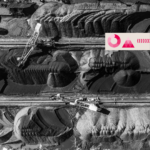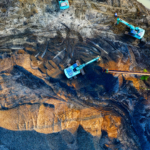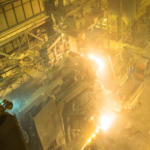
The new EU Battery Regulation aims to make batteries sustainable in the future. However, there are gaps in the Regulation: Copper and bauxite, which are very important for battery production, do not appear in it at all. As a result, we are discussing the shortcomings of the new regulation and why the current version will not be sufficient. We also take a look at the mining areas of the forgotten battery raw materials in Chile, Peru, Mexico and Guinea and talk about environmental damage and human rights violations. How important are copper and bauxite for growing e-mobility, for example, and what alternatives are there?
Correction: This podcast episode erroneously states that acid mine water – often referred to as acid mine drainage (AMD) – would result from the misapplication of chemicals. It is true that acidic pit waters occur when sulfidic minerals are exposed to moisture and (air) oxygen. A chain of chemical reactions leads to oxidation and hydrolysis and thus to the formation of acidic leachate. These acidic seepage waters, in turn, can release heavy metals from the rock and thus further exacerbate the environmental problem. (cf. Federal Environment Agency: Discussion of ecological limits of primary raw material extraction p.28)
Learn more about bauxite and aluminium in our profile: https://power-shift.de/die-vergessenen-batterierohstoffe-bauxit-und-aluminium/
... and about copper in this profile: https://power-shift.de/die-vergessenen-batterierohstoffe-kupfer/
In our factsheet you can find out about the land grabbing in Guinea: https://power-shift.de/landraub-fuer-deutsche-autos/
More on the topic in previous podcast episodes:
Podcast number 14: #StopsUnFaireloans – No land grabbing for German cars
Podcast number 16: Into the future with sustainable batteries?
Feel free to write to us: podcast@power-shift.de
This project was funded by the Federal Environment Agency and the Federal Ministry for the Environment, Nature Conservation, Nuclear Safety and Consumer Protection. Funding is provided by decision of the German Bundestag.
The responsibility for the content of this publication lies with the authors.