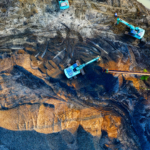
A world without metallic raw materials? Not imaginable. They meet us in our everyday life in the form of coffee machines, bicycles, cutlery, smartphones and are installed in our apartments as pipes, pipes or steel beams. Also for the socio-ecological transformation we need iron, aluminum, copper, nickel and Co. But our consumption has consequences. We don't always see them, because the deep holes and tunnels, the human rights violations and environmental destruction are created elsewhere. So instead of blindly consuming more and more metals, we have to start saving these valuable raw materials in many sectors. Where and how exactly, the Institute for Energy and Environmental Research ifeu and PowerShift have investigated. Maja Wilke closely accompanied the study for PowerShift. In this episode, she talks to our moderator Antonia Vangelista about what needs to happen in order to actually reduce raw material consumption in Germany. In addition, human rights lawyer Mario Maderazo reports on the negative effects of nickel mining in the Philippines, and Sonja Limberger, an expert on resource use and raw material requirements at the ifeu Institute, talks about potential savings through recycling.
To listen and read more:
-
- publication ‘Reduce metal consumption: Practical proposals for shaping the raw materials transition’
- Background study "Use and reduction potential of base metals in Germany and the EU" (ifeu Institute on behalf of PowerShift)
- Podcast sequence #47 on Reduction in the National Circular Economy Strategy
- Overview of PowerShift's work for the turnaround in raw materials