The following text is based on the English version of this website (https://power-shift.de/campaign/ceta-climate-impact-report/). A translation tool was used for the translation, no editing took place. In case of doubt, please consult the English page, this text is intended only as a guide for those who prefer to read a German text.
introduction
At a time of increasing geopolitical tensions and the urgent need to combat climate change, the interface between trade and the environment has become a critical focus for researchers, policy makers and environmentalists alike. In particular, the climate crisis has led to renewed interest in trade agreements, as they can have a significant impact on greenhouse gas emissions by increasing international trade in often emission-intensive goods and services. An example of this is the Comprehensive Economic and Trade Agreement (CETA) between the European Union (EU) and Canada. On the other hand, trade agreements, if properly designed, could instead promote climate change mitigation and adaptation at global level, as well as the decarbonisation of global supply chains.
CETA is a remarkable example of a modern trade agreement with a profound impact on climate change and the environment. CETA, which provisionally entered into force on 21 September 2017, is one of the most comprehensive and comprehensive trade agreements in the world. The agreement not only aims to remove numerous trade barriers to energy-intensive goods, but also has an impact on various aspects of environmental policy and raises growing concerns about its impact on global warming.
The EU plays a crucial role in the transition to greener trade in a net-zero world. This is due to its importance as a trading power and its ambitious climate targets as set out in the European Green Deal. European institutions are also influencing the global discourse on the environmental impact of international trade agreements. For example, at the beginning of the CETA ratification process, the European Commission and the Council promoted the agreement as "one of the most advanced trade agreements ever concluded by the EU", which they considered would include "some of the strongest commitments" on environmental protection and climate change.1https://www.consilium.europa.eu/media/50387/factsheet_eu_canada_2021-05.pdf https://trade.ec.europa.eu/access-to-markets/en/country-assets/tradoc_156061.pdf However, many experts, researchers and civil society groups were more critical of the environmental benefits of the agreement, questioning in particular its impact on climate and biodiversity.2https://www.gouvernement.fr/rapport/9467-remise-du-rapport-de-la-commission-d-evaluation-de-l-impact-du-ceta; https://www.foodwatch.org/fileadmin/foodwatch_international/campaigns/CETA/France_experts_Report_CETA_impact_on_environment_climate_health_2017_ENGLISH.pdf; https://www.transportenvironment.org/discover/ceta-and-environment-gold-standard-planet-or-big-business Given the very different views on the climate impact of the agreement and the ongoing ratification process in the EU, CETA offers an excellent case study to examine how trade agreements, in particular those involving partners with strong environmental commitments, actually affect climate outcomes.
This study therefore looks at the multifaceted link between the EU-Canada trade agreement and climate change. By examining CETA provisions and mechanisms, as well as actual trade flows between the EU and Canada, the analysis presented here aims to shed light on the potential impact of trade agreements on global warming. The study also provides a deeper understanding of the mechanisms contained in such a trade agreement and their potential impact on trade flows affecting the environment. In addition, the analysis aims to help stakeholders identify the clauses that need to be amended in order for the agreement to actually contribute to net-zero trade. It is therefore also intended as a tool to support policy makers in reshaping trade policy and promoting the EU’s climate objectives.
On the following pages, we look at trade flows before and after the implementation of CETA, the environmental and climate-related provisions, key components and institutions of the agreement, as well as the multiple challenges the agreement poses to greener trade. We will analyse the possible trade-offs between market access commitments and EU environmental objectives and assess whether CETA is consistent with the overarching objective of tackling global warming. With this analysis, we hope to contribute to the ongoing debate on the role of trade in achieving a climate-neutral economy in a net-zero world.
methodology
In today's globalized world, trade agreements play a central role in shaping economic relations between nations. However, these agreements are not static documents. Rather, they evolve and adapt over time, with a significant impact on the economies, societies and ecosystems of the signatory countries. Assessing and understanding these impacts is crucial for policy makers, stakeholders and the public alike. However, assessing the ex-post impact of a trade agreement requires a specific methodology that: needs to be adapted to the specific objectives of the evaluation.
The main objective of our study is to assess the climate impact of CETA since its provisional application in September 2017. In this respect, our approach is more focused than other ex-post evaluations of trade agreements, in particular those of the European Commission. 3For an overview of the EU’s ex-post evaluations envisaged so far see: https://policy.trade.ec.europa.eu/analysis-and-assessment/ex-post-evaluations_en The EU ex post evaluations are one of four evaluation tools used by the Commission during the life cycle of a trade agreement (see Box 1).
Box 1
EU instruments for the evaluation of trade agreements 4Adapted from: Thomas Dauphin/Mathilde Dupré: The European Commision’s Trade Sustainability Impact Assessments: A Critical Review, Veblen Institute/Greenpeace, Paris/Hamburg, May 2022: https://www.veblen-institute.org/The-European-Commission-s-Trade-Sustainability-Impact-Assessments-a-critical.html
| phase | instrument |
|---|---|
| preparation | Impact assessment |
| negotiations | Sustainability Impact Assessment (SIA) |
| Signature/Conclusion | Economic evaluation of the outcome of the negotiations |
| implementing | Ex post evaluation |
The Commission's ex-post evaluations are evidence-based assessments of the extent to which an agreement has effectively achieved its objectives. The Commission services usually prepare the ex-post evaluations and may also use work outsourced to external service providers. The official ex-post evaluation of CETA is planned for 2024.
One of the most recent ex-post evaluations published by the Commission concerns the Deep and Comprehensive Free Trade Area (DCFTA) with Georgia, which was published in September 2023. The final report of the DCFTA evaluation highlights some of the limitations of the EU approach . When assessing a fairly wide range of issues, including economic, regulatory, business, labour and environmental impacts, no significant attention is paid to the climate outcome. Out of 110 pages, only three deal with the climate impact of the agreement. This assessment is mainly based on the highly aggregated results of an econometric model covering only a limited number of energy-related greenhouse gas (GHG) emissions. 5Ex post evaluation of the Trade Agreement between the European Union and Georgia, September 2023. https://circabc.europa.eu/ui/group/09242a36-a438-40fd-a7af-fe32e36cbd0e/library/207a8045-ab42-43dc-a2e2-af0b4ae5b73c?p=1&n=10&sort=modified_DESC Accessed: 16.10.2023.
Another disadvantage of the Commission's approach relates to the overall objective of the trade agreement, the fulfilment of which is being assessed: Increased bilateral trade. As the Commission bluntly states: "The Comprehensive Economic Agreement (CETA) is a trade agreement between the EU and Canada. The aim is to boost trade and contribute to the creation of growth and jobs.” 6European Commission: CETA chapter by chapter: https://policy.trade.ec.europa.eu/eu-trade-relationships-country-and-region/countries-and-regions/canada/eu-canada-agreement/ceta-chapter-chapter_en In contrast, the central research question of our ex-post evaluation relates to the contribution of the agreement to the objective of a net-zero world economy and not to boosting bilateral trade. Worryingly, the EU approach to ex-post evaluations is far too limited to gain adequate insight into the climate impact of implementing a trade agreement such as CETA . A different approach is needed, fully focused on the climate crisis.
The methodology used for our ex-post evaluation of CETA implementation is based on four pillars:
- Analysis of Variations in trade in goods with Focus on high-impact raw materials (fossil fuels, raw materials, emission-intensive industrial products, forest risk raw materials);
- Analysis of Rules, Institutions and Decisions Governing Climate Policy regulate the trade agreement;
- Analysis of Work of CETA bodies and dialogues , which have a strong impact on the climate;
- Estimates of the impact of CETA: Investment rules flows, stocks and investment protection.
The analysis of all four pillars of our methodology was carried out using a specific climate lens.
The first pillar provides basic data reflecting the evolution of trade in goods between the EU and Canada since the introduction of CETA. The main objective of this pillar is to identify goods that have a strong impact on the climate, including those that were already duty-free at the time of the entry into force of CETA . The reason for this approach is that a truly green trade agreement must include targeted measures that mitigate the risks of all emission-intensive goods, regardless of specific tariff cuts or fluctuations in trade flows. In addition, the analysis also includes an assessment of the rather modest role of so-called ‘green goods’ promoted under CETA .
The second pillar looks more closely at the rules, institutions and decisions governing CETA’s climate policy. It delivers Analyses on the CETA chapters on sustainable development and the environment, the work programme of the Committee on Sustainable Development, the Domestic Advisory Groups and the Commission’s ‘Interpretative Declaration’, which aims to strengthen the rather weak climate provisions of CETA.
The The third pillar consists of an analysis of the CETA established committees and dialogues whose decisions may influence the climate impact of the Agreement. The committees and dialogues reflect the character of CETA as a ‘new generation’ trade agreement – one that focuses not only on tariff reductions but also on the elimination of non-tariff measures such as technical standards or environmental regulations. Decisions on these types of measures, including amendments to the agreement itself, can be taken by committees composed of representatives of the EU and Canada, focusing on areas such as goods, agriculture or health and phytosanitary measures. These decisions can also be prepared in bilateral dialogues on topics such as regulatory cooperation, raw materials or forest products. The ongoing work of the committees and dialogues we assess under this pillar is an important example of why CETA is described as a ‘living agreement’ that is constantly evolving.
Finally, the study Fourth pillar our methodology, the investment provisions of CETA , some of which – investment protection – will only be applied once the Treaty has been ratified in all EU Member States. However, liberalisation commitments were already made in September 2017. in force with the aim of stimulating bilateral investment flows and thereby increasing investment stocks. Our analysis thus provides data on EU-Canadian investment flows and stocks as well as an assessment of possible climate impacts of the investor-state dispute.
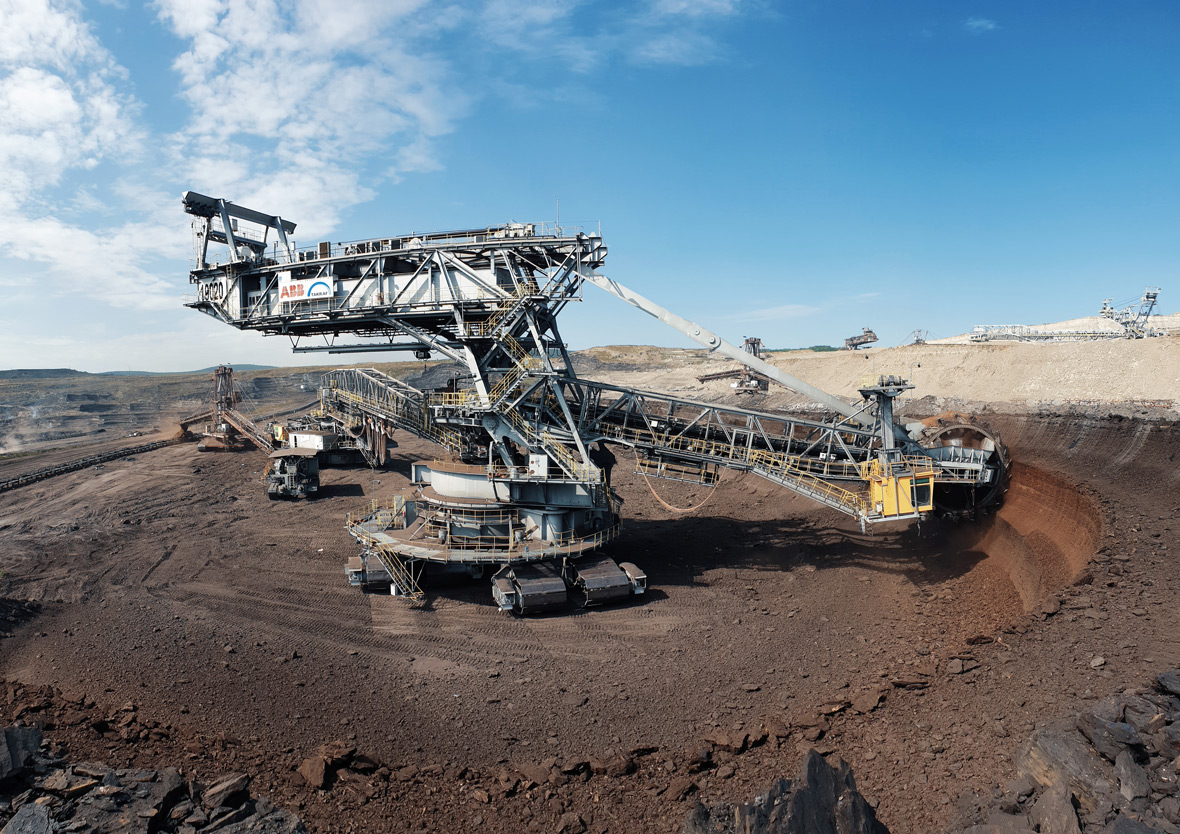
Bucket wheel carbon excavator at work. Photo: Albert Hyseni / Unsplash.com
Our four-track methodology provides a structured framework for assessing the climate outcomes of CETA implementation. It takes into account the specific interplay of treaty rules, institutional mechanisms, government regulations and economic operators' decisions on trade and investment flows between the EU and Canada.
Our methodology goes beyond traditional impact assessments, which are usually based on the suspected changes in trade flows due to the reduction of tariffs and non-tariff measures. Contrary to these assessments, we take actual trade and investment relations as a starting point to identify any harmful trade relations that require special treatment in order to mitigate the climate impact of the respective trade agreement. This analysis is complemented by an assessment of the concrete decisions taken under the institutional mechanisms established under the Agreement.
On this basis, it is possible to develop targeted mitigation measures that: Improve production processes and phase out trade in particularly harmful goods. Our methodology therefore aims to empower policy-makers, civil society and the general public by providing a practical tool to support the improvement of trade agreements already in force. We will continue to refine the methodology used here and intend to apply it to other trade agreements in the future.
Trade in goods between the EU and Canada
The main purpose of this chapter is to provide some basic data on the evolution of trade in goods between the EU and Canada, with a particular focus on goods that have a strong impact on sustainability and climate change. In this context, it is important to note that although CETA has been provisionally applied since September 2017, this does not necessarily imply a causal link between the trade agreement and the above-mentioned fluctuations in trade flows.
The data presented here should rather be seen as part of a scoping study to identify goods with significant climate impacts that would require special treatment in a truly environmentally friendly trade agreement. Such treatment should be applied irrespective of the level of agreed tariff reductions or the specific fluctuations in trade flows.
Another note concerns the approach of our scoping exercise. Official impact assessments usually try to measure and assess the suspected changes in trade flows due to tariff cuts. Contrary to these official assessments, however, we also take into account products for which CETA does not provide for new market access or tariff reduction obligations. This applies, for example, to goods that were largely duty-free in the EU before CETA, such as iron ore, coal, crude oil, soya, rapeseed and many wood products.
Trade in all these goods has a serious impact on climate change, both in terms of production and consumption. To exclude them from the assessment of the climate impact of CETA would therefore give a highly distorted picture of an agreement that is presented as a major step forward for green and sustainable trade.
This, in turn, illustrates the criteria that we believe should be used when assessing a progressive trade agreement. One of the main objectives of a truly sustainable trade agreement should be to identify the most harmful products in the parties' bilateral trade and agree on concrete measures to eliminate the environmental risks they pose. These mitigation measures can take various forms, including improved production methods or the reduction and discontinuation of trade in particularly harmful products. These measures may also be complemented by commitments to provide technical and financial assistance as well as technology and know-how transfer where deemed necessary by the Parties.
The following explains why we consider the following criterion to be the most important criterion for our assessment: To what extent CETA actually contributes to the removal of environmental and climate pressures from EU-Canada trade. In the following sections, we hope to answer this question by compiling and analysing basic data on EU-Canada trade flows.
Development of trade in goods – the general picture
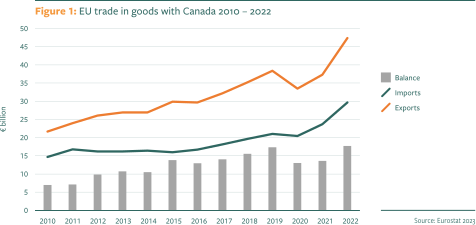
In the first two years since the provisional application of CETA, EU trade in goods with Canada has steadily increased. However, in 2020, the impact of the COVID-19 pandemic led to a significant decrease in bilateral trade. However, this slump has been followed by a strong recovery in the last two years. Over the whole period under review, the EU achieved a huge trade surplus with Canada (Figure 1).
The composition of EU-Canada bilateral trade shows some imbalance. While EU exports are largely dominated by industrial goods such as machinery, cars and chemicals, Canada's exports to the EU have a significantly higher share of raw materials and energy. Overall, the share of manufacturing in Canada's export portfolio is significantly lower than in the EU (Figure 2).
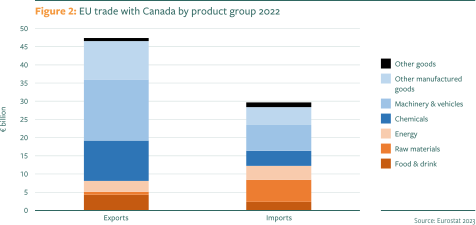
This rather comprehensive overview of the composition of EU-Canada trade already provides some indications of which sectors need to be studied in order to assess the climate impact of CETA. In the case of the EU, it is obvious that attention needs to be paid to manufacturing and its greenhouse gas emissions.
In the case of Canada, in addition to the raw materials and energy sectors, the climate impact of the manufacturing industry must also be taken into account. Finally, in both cases, the food and agricultural sectors should not be neglected, although they are somewhat lagging behind in the sectoral breakdown of bilateral trade. This is because both partners are lagging behind in curbing their agricultural greenhouse gas emissions , especially in the livestock sector .
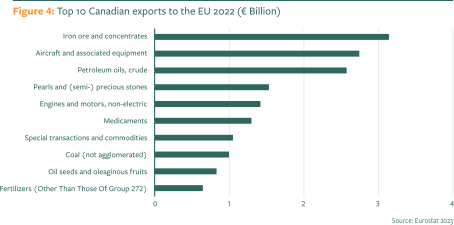
A compilation of the top 10 products exchanged between the EU and Canada in 2022 offers a More detailed overview. Products of chemical (Pharmaceuticals, compounds) and the automotive industry (cars, engines) are among the most important goods in the EU’s trade portfolio (Figure 3). For Canada, raw materials and fossil fuels such as iron ore, crude oil and coal are among the most traded commodities (Figure 4). The top 10 lists of partners also show significant reciprocal trade in fossil fuels. Canada supplies crude oil to Europe, but at the same time imports significant quantities of refined oil (products such as petrol) from the EU. Other important and potentially climate-damaging products in bilateral trade include aircraft, fertilisers and oilseeds. As regards the latter, Canada is a major supplier of rapeseed and soybeans to the EU.

Iron ore imports from Canada
Canada is an important supplier of raw materials to the European iron and steel industry. one of the most energy- and emission-intensive branches of the manufacturing industry. Among other things, the country exports large quantities of iron ore, the indispensable component of iron and steel production.
However, as no tariffs already apply to iron ore in the EU, this has been largely ignored in the assessment of the CETA agreement. Given the serious environmental impacts associated with iron ore extraction, such as air and water pollution, biodiversity loss and land use change –, carbon emissions and numerous have a negative impact on the local community; This is a significant omission. In Canada, iron ore production conflicts continue to arise, as in the case of the Mary River Mine, co-owned by Luxembourg-based ArcelorMittal. 7https://www.theguardian.com/environment/2022/nov/17/canada-arctic-mine-expansion-rejected-protest
In monetary terms, the volume of EU iron ore imports from Canada has increased significantly since the provisional application of CETA . In the last two years, the trade value has increased compared to the Pre-agreement period more than doubled (Figure 5).
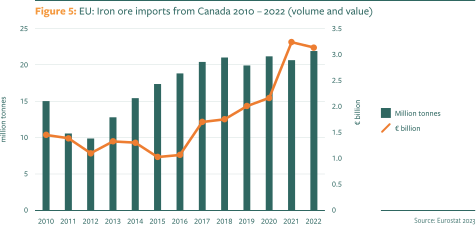
However, a slightly different picture emerges when the volumes traded are expressed in physical numbers. Since 2017, the fluctuation in iron ore imports from Canada has been less pronounced and fluctuated at around 21 billion tonnes. Nevertheless, the amount of iron ore exported from Canada every year since 2017 is still significantly higher than between 2010 and 2017. A comparison of the evolution of monetary and physical trade volumes shows that price effects have played a role.
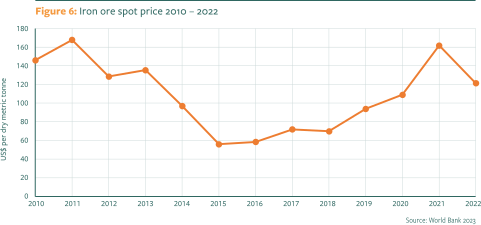
The fact that world market prices actually influenced the monetary values that the EU imported from Canada is illustrated by the spot prices for iron ore. As can be seen, the price of iron ore rose sharply between 2019 and 2021 and fell again in 2022 (Figure 6). However, the higher physical import volumes from Canada could be an indication that CETA has helped to cushion the price increase on the world market – a rather questionable outcome from an environmental point of view.
Given the increased imports and the overall environmental impact of iron ore along the supply chain, including its extraction, transport and smelting in blast furnaces, it would have been desirable to include targeted remedial actions to address these negative impacts in CETA . Unfortunately, this did not happen.
Crude oil and coal imports from Canada
Another cause for concern is the trade in fossil fuels between the EU and Canada. Despite the urgent need to phase out the production and use of fossil fuels, CETA does not contain any provisions in this regard. Worryingly, this has allowed for almost unhindered growth in European crude oil imports from Canada, which have seen a steep increase since the application of CETA. It is important that the increase in imports is not only a monetary but also a physical phenomenon. Crude oil imports have risen sharply in both value and volume, albeit to a lesser extent in 2019 and 2020, but with a large jump in 2022 (Figure 7).

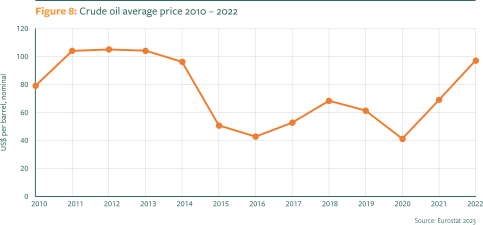
The fact that the increase in value is still slightly higher than the increase in volume suggests that oil prices have also played a role. The evidence shows that the global average price of crude oil rose sharply in 2021 and 2022 (Figure 8).
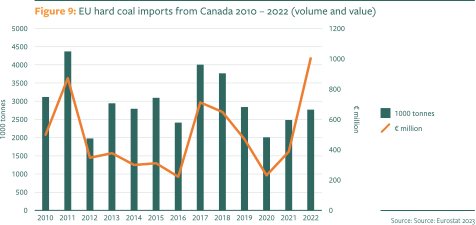
Price effects also affected the development of coal imports into the EU . While the implementation of CETA was accompanied by a significant increase in the value of EU coal imports from Canada, physical trade developed somewhat differently. While the first two years after implementation also saw a significant increase in physical trade compared to the years before CETA, there was a decrease in 2019 and 2020, followed by a further increase in the last two years (Figure 9).
The evolution of the world market price for Australian coal – a global benchmark – shows that the huge EU imports of Canadian coal, expressed in money, were indeed influenced by market developments (Figure 10). The increase in the price of coal on the world market in 2022 has also driven up the import price of Canadian coal.

Given the urgency of the climate crisis and the need to completely end the use of fossil fuels, it cannot be denied that the scale of the EU-Canada coal trade remains a concern, even if the increase in trade is not as pronounced as that of crude oil.
The evaluation of the EU-Canada trade agreement should therefore place a strong focus on developments in the area of crude oil and coal trade, notwithstanding the fact that EU import tariffs on these raw materials are already in place. CETA has been set to zero. In this way, impact assessments should also highlight one of the main weaknesses of CETA: The need for a rapid exit from the production, trade and consumption of fossil fuels are not taken into account or even ignored.
Bilateral beef trade
Both in the EU and Canada, agricultural methane emissions remain largely unregulated, although methane is one of the strongest greenhouse gases and is believed to account for one third of global greenhouse gas emissions . Since methane is a natural by-product of the digestive process of ruminants, also known as enteric fermentation, the livestock sector is responsible for a significant proportion of total methane emissions. 8https://globalnews.ca/news/8331729/cattle-beef-farming-methane-emissions; https://www.reuters.com/business/environment/eu-countries-seek-weaken-livestock-emission-limits-2023-03-16 However, in recent decades, both partners have largely failed to make significant progress in reducing greenhouse gas emissions from their agricultural and livestock sectors, with enteric fermentation accounting for almost half of agricultural emissions in the EU and Canada (Figures 11 and 12).


Despite this failure, CETA does not contain any concrete commitments to address the contribution of livestock farming to climate change. On the contrary: The agreement aims to increase trade in beef, which accounts for most of agricultural methane emissions. For example, the EU grants two duty-free tariff quotas to Canadian exporters for fresh and chilled and frozen beef. 9https://www.international.gc.ca/trade-commerce/trade-agreements-accords-commerciaux/agr-acc/ceta-aecg/2020-11-12-beef-pork-exp-boeuf-porc.aspx?lang=eng Although these quotas have so far been used only minimally, EU imports of beef from Canada have nevertheless increased sharply since the introduction of CETA (Figure 13). 10Kutlina-Dimitrova, Zornitsa: CETA: Evolution of Key Economic Indicators, European Commission, Trade, Chief Economist Note, March 2023: https://circabc.europa.eu/rest/download/faff658b-3e97-4784-a869-3025888bdec4
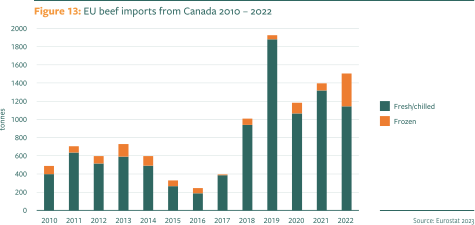
Canada also reduced its import tariff on EU beef from 26.5 through CETA % to 0 % . This step strengthened EU beef exports to Canada, in particular frozen beef, which There has been a large increase, especially since 2020. Before CETA EU beef exports to Canada were largely absent (Figure 14). ) .
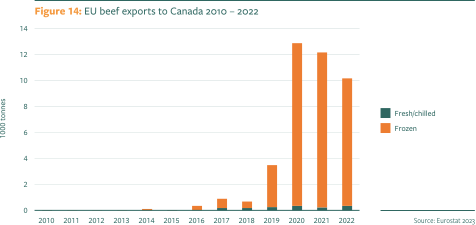
A recent report by the EU Commission acknowledges this development, claiming that "the EU exports more beef to Canada than vice versa, with European exports of frozen beef growing impressively". 11Kutlina-Dimitrova, Zornitsa: CETA: Evolution of Key Economic Indicators, European Commission, Trade, Chief Economist Note, March 2023: https://circabc.europa.eu/rest/download/faff658b-3e97-4784-a869-3025888bdec4 However, taking into account the associated methane emissions, Europe's success in increasing its beef exports seems to be a rather questionable achievement, undermining the EU's goal of reducing its greenhouse gas emissions.
Rapeseed and soybean imports from Canada
Closely related to livestock farming is the European-Canadian trade in oilseeds used as animal feed, in particular soybeans and rapeseed. Due to the EU's persistent deficit in protein feed, soybeans, rapeseed and other protein-rich oilseeds have been present in the EU for many years. decades duty-free. Nevertheless, a truly progressive trade agreement would have contained targeted provisions to minimise the harmful environmental impact of soybean and rapeseed monocultures in Canada. However, such commitments are lacking in the EU-Canada trade agreement.
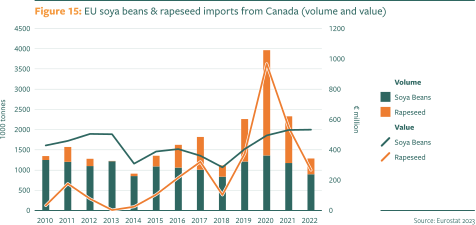
Since the provisional application of CETA in 2017, EU soybean imports from Canada have seen only a modest increase, in particular in value terms. However, EU rapeseed imports increased significantly, both in terms of volume and value, especially in 2020, when they reached almost EUR 1 billion (Figure 15).
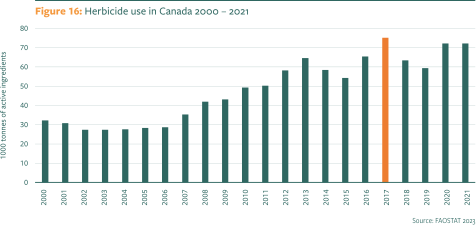
About 95 percent of canola and 60 percent of soybean crops grown in Canada are genetically modified (GM). These plants are designed to withstand spraying with herbicides such as glyphosate, glufosinate, 2,4-D or dicamba. 12https://cban.ca/gmos/products/on-the-market/canola/; https://cban.ca/gmos/products/on-the-market/soy/ In Canada, the use of herbicides has increased significantly over the past 15 years. 2017 was the year in which the largest amount of herbicides has been used so far: around 75,000 tonnes (Figure 16).
The potential negative impacts of these genetically modified plants and the herbicides used for their cultivation are very significant, including biodiversity loss, soil erosion, water pollution and numerous health threats. In 2015, the World Health Organization classified glyphosate, the most commonly used synthetic herbicide, as likely to be carcinogenic. 13Gandhi, Kavita et al.: Exposure risk and environmental impacts of glyphosate: Highlights on the toxicity of herbicide co-formulants, Environmental Challenges, 4, 2021: https://www.sciencedirect.com/science/article/pii/S2667010021001281
In addition, the production, transport and use of herbicides result in significant greenhouse gas emissions . Additional emissions are caused by the herbicides released into the environment and their interaction with soil and atmosphere. 14Sharma, Asha et al.: Pesticides and Climate Change: A Vicious Cycle, Pesticide Action Network North America, Winter 2022-2023: https://www.panna.org/wp-content/uploads/2023/02/202308ClimateChangeEng.pdf Despite these problems, CETA does not contain any concrete remedial measures to address the risks of an increasing rapeseed and soybean trade. Worse still: EU rules setting maximum levels for pesticide residues in food imports are regularly challenged by Canadian officials at meetings of the CETA Committee on Health and Plant Health (see ‘Investment: Flows, stocks and protection’ ).
Bilateral trade in forest products
The CETA chapter on trade and the environment contains a provision obliging the Parties to ‘promote trade in forest products from sustainably managed forests’. 11 Although the majority of Canada's vast forests are actually managed differently, this is not done in a sustainable way. As a result, Canada's managed forests have evolved from a carbon sink to a huge source of carbon emissions since 2001, with industrial logging and forest fires among the biggest problems. Industrial logging in particular has released far more carbon dioxide than could be absorbed by growing trees. 15https://thebulletin.org/2023/08/managed-to-death-how-canada-turned-its-forests-into-a-carbon-bomb; https://www.cbc.ca/news/science/forestry-emissions-accounting-1.6227903
Despite these threats to the environmental integrity of Canadian forests, CETA aims to increase EU-Canada timber trade. While the majority of forest products in the EU were already duty-free, CETA abolished the remaining tariffs on Canada's timber exports. The agreement, for example, lowered tariffs on fiberboard, plywood and maple wood extracted from Canada's famous maple tree. 16https://www.international.gc.ca/trade-commerce/trade-agreements-accords-commerciaux/agr-acc/ceta-aecg/business-entreprise/sectors-secteurs/FS-SF.aspx?lang=eng; https://www.cbc.ca/news/canada/calgary/canada-forests-carbon-sink-or-source-1.5011490
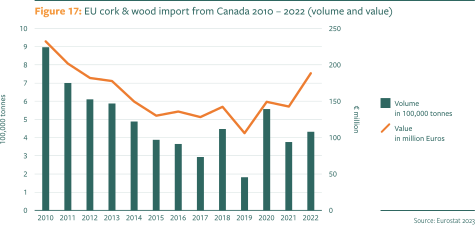
Prior to CETA, EU imports of forest products from Canada declined. However, a turnaround has occurred since provisional application. With the exception of 2019, European imports of Canadian cork and wood reached higher levels than in 2017. In monetary terms, this upswing was even more pronounced, with the import value reaching a level last observed ten years ago in 2022 (Figure 17).
While Canada's timber exports reversed their decline since the implementation of CETA, the corresponding EU exports to Canada recorded an even stronger increase compared to the pre-agreement period. Although the surge in the volume of cork and wood exported started in 2016, the increase measured in euro has been particularly pronounced in the last two years (Figure 18).

The significant increase in EU timber exports to Canada is also taking place in Europe against the background of accelerated forest loss. Satellite data suggest that logging may have reached unsustainable levels in countries such as Sweden and Finland. The increased harvest due to growing demand also weakens the ability of European forests to absorb carbon dioxide, thereby undermining the EU's ability to meet its climate targets. 17https://www.theguardian.com/environment/2020/jul/01/europe-losing-forest-to-harvesting-at-alarming-rate-data-suggests
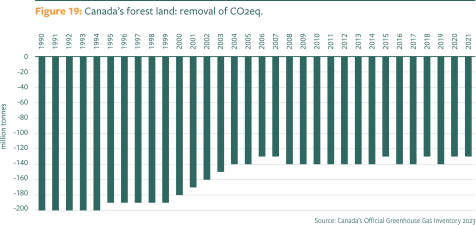
In fact, the forest areas of both partners – i.e. the entire area of natural and managed forests – suffer from a reduced ability to remove carbon dioxide, mainly due to high harvest rates. In Canada, this process started 20 years ago (Figure 19). 18https://thebulletin.org/2023/08/managed-to-death-how-canada-turned-its-forests-into-a-carbon-bomb In the EU, the carbon removal capacity of forest land has steadily decreased over the last 10 years (Figure 20). 19European Environment Agency: Greenhouse gas emissions from land use, land use change and forestry in Europe – 8th EAP, 26 October 2022: https://www.eea.europa.eu/ims/greenhouse-gas-emissions-from-land

Against this background, the removal of the remaining timber tariffs by CETA and the resulting increase in transatlantic trade flows are likely to put additional pressure on European and Canadian forests and further weaken their absorption capacity. Although this risk was well known to EU and Canadian trade negotiators, the agreement does not provide for safeguards that protect forests in their role as carbon sinks from growing international demand for wood. Worse still: Minutes of the debates in the CETA Committee on Trade in Goods and the bilateral dialogue on forest products show that even progressive measures such as the EU deforestation regulation are being called into question – Canadian officials repeatedly criticised the regulation for endangering Canadian timber exports to the EU (see ‘Investment: Flows, stocks and protection’ ).
European-Canadian plastics trade
The European chemical industry is a major contributor to climate change and other environmental damage, such as air and water pollution and species extinction. The petrochemical industry and its plastics production are among the most polluting subsectors, with plastic pollution of the oceans being only one of the most visible impacts. It is estimated that current fossil-based plastics, i.e. polymers derived from fossil fuels, will account for 15 percent of humanity's remaining carbon budget by 2050. Despite the clear risks these polymers pose, plastic demand is expected to double by 2050. 20European Environment Agency: Greenhouse gas emissions from land use, land use change and forestry in Europe – 8th EAP, 26 October 2022: https://www.eea.europa.eu/ims/greenhouse-gas-emissions-from-land
As the world's largest exporter and importer of plastics, the EU bears great responsibility for this development. 21Deer Birkbeck, Carolyne et al.: Trends in Trade Flows Across the Life Cycle of Plastics: Preliminary Review, TESS – Forum on Trade, Environment & the SDGs, Briefing Note, May 2023: https://tessforum.org/latest/trends-in-trade-flows-across-the-life-cycle-of-plastics-preliminary-review But CETA's market access commitments fuel the growing demand for plastics by eliminating tariffs on chemicals and plastic products of up to 6.5 percent. 22Government of Canada: Technical Summary of Final Negotiated Outcomes – Canada-European Union Comprehensive Economic and Trade Agreement: https://www.italaw.com/sites/default/files/archive/ceta-final-negotiated-outcomes.pdf
Since the provisional application of CETA, the value of EU plastics exports to Canada has increased significantly, especially in the last two years, resulting in a substantial surplus for the EU . By contrast, Canada’s exports of plastics increased more modestly, but accelerated in 2022 (Figure 21).

However, it is important to note that the data in the Eurostat database cover only part of the plastics trade and are limited to products under Chapter 39 of the Harmonised System (HS), the product classification managed by the World Customs Organisation. Experts from the United Nations Conference on Trade and Development (UNCTAD) have therefore been working on developing a database that covers the breadth of the plastics trade, including other chapters of the Harmonized System, as well as estimates of so-called hidden plastic flows. These hidden streams include, for example, plastic products used for packaging (e.g. pre-packaged food) and the huge amounts of plastics contained in industrial goods – from televisions to cars. The database also provides a breakdown of traded products along different phases of the plastic life cycle. 23Barrowclough, Diana: Global trade in plastics: insights from the first life-cycle trade database, UNCTAD Research Paper No. 53, December 2020: https://unctad.org/publication/global-trade-plastics-insights-first-life-cycle-trade-database
The EU’s growing exports of plastics to Canada consist mainly of primary, intermediate and final products (Figure 22). Particularly worrying is the high proportion of primary plastics such as resin pellets and synthetic fibers. Most resin pellets are made of microplastics, many of which end up in the environment. This microplastic is non-biodegradable, accumulates in animals and humans, and poisons terrestrial and marine ecosystems, as well as food and drinking water. 24Cabrera, Jewel S.: Plastic pellet pollution can end through coordinated efforts, report shows, Mongabay, 21 December 2022: https://news.mongabay.com/2022/12/plastic-pellet-pollution-can-end-through-coordinated-efforts-report-shows In addition, plastics contained in final products exported from the EU to Canada, such as cars and electronics, also pose an environmental risk, as only a small proportion of these components are recycled.

The EU is the world's largest exporter of some of the most polluting plastic products. 22 This is reflected in the EU’s growing exports of plastic packaging to Canada, which recorded a particularly strong increase from 2019 to 2021 (Figure 23). Most plastic packaging is disposable and difficult to recycle because it is contaminated, combined with non-recyclable materials, or contains toxic materials. 25Barrowclough, Diana: Global trade in plastics: insights from the first life-cycle trade database, UNCTAD Research Paper No. 53, December 2020: https://unctad.org/publication/global-trade-plastics-insights-first-life-cycle-trade-database

Other environmental risks arise from the EU’s increasing exports of synthetic fibres, such as polyester and nylon, used to produce synthetic textiles (Figure 23). The production of these synthetic fibers requires large amounts of energy and thus contributes significantly to climate change without completely decarbonizing the energy system. Environmental damage also occurs when washing, drying and ironing these fibres. These risks are exacerbated by the release of microplastics throughout the life cycle of synthetic textiles, from the production of the fibres, through their transport and use, to their final disposal. 26European Environment Agency: Plastic in textiles: towards a circular economy for synthetic textiles in Europe, Briefing, 28 January 2021: https://www.eea.europa.eu/themes/waste/resource-efficiency/plastic-in-textiles-towards-a
Despite the EU's great responsibility for global plastic pollution, CETA lacks concrete commitments to mitigate the risks associated with the growth of plastics production and trade. The agreement even exacerbates these risks by eliminating the remaining tariffs on several plastic products.
Putting the trade in ‘green goods’ in the right light
Article 24.9 of the Trade and Environment Chapter of CETA commits the Parties to “facilitate and promote trade and investment in environmental goods and services”. Trade in environmentally friendly or ‘green goods’ has developed into one of the key areas highlighted by the Commission as it seeks to improve environmental performance; Trade agreements such as CETA to be substantiated .
According to a Communication from the Chief Economist published by the Commission, bilateral trade in environmental goods between the EU and Canada increased from EUR 4.7 billion to EUR 5.6 billion in the four years before and after the provisional application of CETA. 27Kutlina-Dimitrova, Zornitsa: CETA: Evolution of Key Economic Indicators, European Commission, DG Trade, Chief Economist Note, March 2023: https://circabc.europa.eu/rest/download/faff658b-3e97-4784-a869-3025888bdec4 However, the share of green goods in total bilateral trade did not exceed 10 per cent over this entire period (Figure 24). It is therefore very difficult to imagine how green goods could offset the climate impact of the 90 percent of non-green, often very emission-intensive goods exchanged between the EU and Canada.
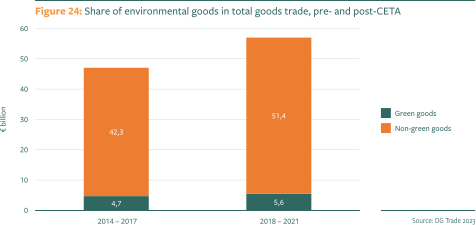
It should therefore be clear that any serious environmental assessment of trade agreements such as CETA must focus on the vast majority of non-environmentally harmful products that are liberalised or not regulated. The public should not be led to believe that small shares of trade in environmental goods would convert largely harmful trade agreements into green ones.
In addition, the environmental benefits of many goods described as ‘environmentally friendly’ or ‘green’ are also disputed. This problem is exacerbated by the Commission’s reference to a list of over 260 ‘green goods’ used during the negotiations on the WTO Agreement on Environmental Goods (EGA), which failed in December 2016. However, this EGA list is neither publicly nor publicly available nor officially recognised. It was just one of several competing lists disseminated during the WTO negotiations.
One of the reasons why negotiators could not agree on a common list of environmental goods was that many of the proposed goods have a dual use. For example, pipes, tubes and tanks can be used to transport fossil fuels and green hydrogen to reduce hard-to-reduce industries. supply with renewable energy. 28Ecorys: Trade in Environmental Goods and Services, Final Report, Rotterdam, 3 March 2023: https://www.rijksoverheid.nl/documenten/rapporten/2023/03/03/ecorys-trade-in-environmental-goods-and-services-final-report To the To identify truly environmentally friendly goods, negotiators would have needed a highly disaggregated classification that is internationally accepted. Unfortunately, there is no such classification yet. Instead, the negotiators used the WTO to compile their respective lists the classification of the Harmonised System (HS) with HS codes at the six-digit level. However, in order to precisely filter out genuine environmentally friendly goods, a breakdown up to the 8- or 10-digit level of the HS codes would have been necessary. 29Michael Gasiorek et al.: Recommendations on the UK Government’s Global Tariff Proposal, Briefing Paper 39, Technical Appendix, March 2020: http://blogs.sussex.ac.uk/uktpo/files/2020/03/Technical-Appendix_BP39.pdf
In addition, environmentally friendly goods can still cause significant greenhouse gas emissions, as their environmental benefits may only be realised at certain stages of their life cycle. While the use or application of certain green goods can contribute to climate protection, their production – including the raw materials and intermediates needed – can still be very emission-intensive. This applies in particular to the production processes of base metals and machinery, the energy supply of which remains highly dependent on fossil fuels. Consequently, increased trade in supposedly ‘green’ goods can still have a negative impact on the climate as long as only individual phases of their life cycle are decarbonised.
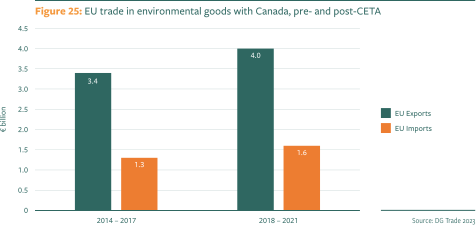
It is also important to note that the EU has a huge surplus in trade in environmental goods with Canada (Figure 25). This raises again the question of whether a truly green trade agreement should not also include targeted measures to promote the production of environmentally friendly goods. And this should certainly be the particular responsibility of the partner with stronger capacities in the green goods market – in the case of CETA the EU . However, beyond the obligation to liberalise environmental goods, CETA does not foresee any concrete measures to promote their production.
In short:
Analysis of the fluctuations in trade flows shows that bilateral trade in numerous climate-damaging products has actually increased since the introduction of CETA. This applies both to the main mineral raw material exported from Canada to the EU – iron ore – and to fossil fuels such as oil and hard coal. In addition to accelerating climate change, production and consumption of these minerals and fuels cause many other environmental impacts – such as air and water pollution, biodiversity loss and land use change.
The liberalisation of agricultural products contributes to the negative climate impact of CETA . Particular risks arise from the quotas and tariff preferences offered for animal products such as dairy products and beef, as both partners have largely failed to make significant progress in reducing greenhouse gas emissions from their livestock sector, with methane being the most harmful of the greenhouse gases emitted. Since the implementation of CETA, beef exports from both partners have risen sharply.
Closely related to livestock farming is the European-Canadian trade in oilseeds used as animal feed, in particular soybeans and rapeseed. While EU soybean imports from Canada recorded a rather modest increase, EU rapeseed imports have increased significantly since the application of CETA. The vast majority of canola and soybean crops grown in Canada are genetically engineered to withstand spraying with herbicides. The use of these herbicides has increased significantly over the last 15 years, resulting in biodiversity loss and significant greenhouse gas emissions .
Trade in forest products has also increased since the introduction of CETA. While EU timber imports from Canada reversed the pre-agreement decline, EU exports to Canada were even more pronounced. The bilateral increase in timber trade is also taking place in Canada and the EU in the context of accelerated forest loss. In both regions, forest land suffers from a reduced ability to remove carbon dioxide, mainly due to high levels of industrial deforestation.
CETA's market access commitments in the chemical industry are also fuelling demand for environmentally harmful goods. Since the entry into force of CETA, EU plastics exports to Canada have increased significantly, including particularly harmful products such as microplastics, plastic packaging and synthetic fibres. The production of these plastics requires large amounts of energy and thus contributes significantly to climate change.
Another concern is the lack of targeted measures to mitigate the climate risks of trade in all these products. CETA does not link its trade preferences to concrete improvements in the production process of the sectors benefiting from the agreement. There is also a lack of concrete provisions to reduce or end trade in particularly harmful products such as fossil fuels. Another glaring gap concerns technology transfer to facilitate decarbonisation in the liberalised sectors.
These failures cannot be compensated by the fact that trade in environmental goods has increased slightly since the introduction of CETA, as the share of green goods in total bilateral trade has never exceeded the 10% threshold. It is therefore difficult to imagine how ‘green’ goods can offset the climate impact of the 90% non-environmental and emission-intensive goods exchanged between the EU and Canada.
All these weaknesses point to perhaps the most fundamental failure of EU trade policy in the context of the climate crisis – the continued prioritisation of liberalisation before transformation. But as our analysis of CETA implementation clearly shows, these priorities need to be reversed. In order to mitigate climate change, the transformation of the production apparatus, the decarbonisation of internationally traded goods must take precedence over the reduction of trade barriers. Only when the production of goods along their value chains becomes climate-neutral will it make sense to further liberalise the markets for these products.
Rules, institutions and decisions regarding climate policy
It is worth noting that both Canada and the EU are not climate champions and have not delivered excellence in climate action. Canada is one of the world's largest emitters of greenhouse gases and scores poorly in the 2023 Climate Change Performance Index. It ranks 58th out of 63 countries, making it one of the countries with the highest CO2 emissions. 30Climate Change Performance Index: https://ccpi.org/country/can/ Accessed: 28.09.2023. In the group of countries that have implemented a high level of climate action, the EU, as the sum of its 27 member states, is only 19 years old. Place, a ranking that hardly reflects the region's claim to be a global pioneer in climate protection. 31Climate Change Performance Index: https://ccpi.org/country/eu/ Accessed: 28.09.2023. In addition, Canada prioritises other issues in trade negotiations, as demonstrated by the NAFTA 2.0 (United States-Mexico-Canada Agreement – USMCA). It is noteworthy that climate action is not mentioned in the text of this agreement. 32Text of the agreement between the United States of America, the United Mexican States, and Canada: https://ustr.gov/trade-agreements/free-trade-agreements/united-states-mexico-canada-agreement/agreement-between Accessed: 19.20.2023.
The aim of this analysis is to investigate the effects of CETA on climate. Our goal is therefore to clarify the concrete provisions of the agreement on climate policy. But which aspects of CETA are relevant to climate change? It is important to bear in mind that the entire agreement and its provisions have an impact on the climate, including trade in goods, agreements on raw materials or forest products, agriculture, sanitary and phytosanitary measures or (climate-friendly) procurement measures. Nevertheless, this section of the report chapter is dedicated to the study of the specific commitments in the sustainability section of CETA , which are primarily aimed at addressing climate challenges.
Box 2
Schedules for CETA and Paris
Overview of the timetable of the negotiations 33Jürgen Knirsch & Anne Bundschuh: CETA: No profit for climate protection (Network Just World Trade). https://www.gerechter-welthandel.org.

It is important to remember that the conclusion of the CETA negotiations coincided almost exactly with the adoption of the 2015 Paris Climate Agreement, ratified by both Canada and the EU . This coincidence provided an opportunity for the parties involved to go beyond rhetoric and agree binding provisions in CETA, so that climate provisions would take precedence over trade provisions in the event of a conflict between the two. Unfortunately, this opportunity has not been used and CETA's allusions to climate protection are inconsistent and weak.
CETA chapters 22 (Trade and Sustainable Development) and 24 (Environment) lack concrete commitments on climate change mitigation and do not relate to the Paris Agreement. One of the most precise sections, Article 24.12, regulates environmental cooperation:
The Parties recognise that enhanced cooperation is an important element in promoting the objectives of this Chapter and undertake to cooperate on trade-related environmental issues of common interest, such as:
[...] trade-related aspects of current and future international relations climate regimes as well as domestic climate policies and programmes related to mitigation and adaptation, including issues related to carbon markets, ways to address negative climate impacts of trade, and means to promote energy efficiency and the development and uptake of carbon-carbon and other climate-friendly technologies; 34COMPREHENSIVE ECONOMIC AND TRADE AGREEMENT (CETA) between Canada, of the one part, and the European Union and its Member States, of the other part: Article 24.12. p. 149, 14.01.2017. COMPREHENSIVE ECONOMIC AND TRADE AGREEMENT (CETA) – between Canada, of the one part, and the European Union and its Member States, of the other part (europa.eu) Accessed: 16.10.2023.
Disappointingly, the chapter lacks concrete commitments on climate action and does not set out any consequences if the parties violate climate agreements or refuse the expected cooperation.
The absence of such measures makes it clear that the requirements of ambitious climate protection are not taken into account. The agreement has been heavily criticised for its shortcomings in addressing the climate crisis, leading to an additional ‘common interpretative tool’ before signature. 35CETA Joint Interpretative Instrument. 14.01.2017.
https://eur-lex.europa.eu/legal-content/EN/TXT/PDF/?uri=CELEX:22017X0114(01) Accessed: 16.10.2023.
https://www.attac.de/fileadmin/user_upload/Kampagnen/ttip/ceta-texte/Gemeinsames_Auslegungsinstrument.pdf Accessed: 08.08.2023. has been included in the CETA text. However, this text also failed to strengthen the inaccurate statements in the overall trade agreement by including concrete trade-related climate protection measures. Instead, the document contains only the following wording:
CETA [...] includes commitments to cooperate on trade-related environmental issues of common interest, such as climate change, with the implementation of the Paris Agreement being an important shared responsibility of the European Union and its Member States, as well as Canada. 36CETA Joint Interpretative Instrument, page 4. 14.01.2017.
https://eur-lex.europa.eu/legal-content/EN/TXT/PDF/?uri=CELEX:22017X0114(01) Accessed: 16.10.2023.
Only one year after the provisional application of the Agreement, the CETA Community Committee published: 37The CETA Agreement established special committees between the EU and Canada to determine how to develop, supplement or implement the agreement. The CETA Joint Committee is responsible for all matters relating to the implementation and interpretation of the CETA agreement. The committee is co-chaired by the Canadian Minister for Trade and the Member of the European Commission responsible for trade, or their designate. The CETA Joint Committee will review any issue relating to the implementation and interpretation of the agreement, or any other issue concerning trade and investment between the Parties. More on the powers and dangers of the CETA Committees in the chapter “Committees and Bilateral Dialogues Established Under CETA”. a recommendation on climate protection. This recommendation also lacks an enforcement mechanism and only reaffirms the commitments previously made by the EU and Canada. It does not provide for specific projects or measures, nor does it threaten to impose penalties for infringements. 38The Recommendation is available here: https://www.international.gc.ca/trade-commerce/trade-agreements-accords-commerciaux/agr-acc/ceta-aecg/rec-001.aspx?lang=eng Accessed: 15.10.2023.
Box 3
The CETA Joint Committee
The Canadian government describes the CETA Joint Committee as follows: ‘The CETA Agreement established special committees between the EU and Canada to determine how the Agreement should be developed, supplemented or implemented.’ The CETA Joint Committee is responsible for all matters related to the implementation and interpretation of the CETA Agreement. The Committee shall be co-chaired by the Canadian Minister for Trade and the Member of the European Commission responsible for Trade or their representative. The CETA Joint Committee will consider all issues related to the implementation and interpretation of the Agreement, as well as all other issues related to trade and investment between the Parties." 39Website of the Canadian Government: https://www.international.gc.ca/trade-commerce/trade-agreements-accords-commerciaux/agr-acc/ceta-aecg/ceta_governance_committees-gouvernance_aecg_comites.aspx?lang=eng Accessed: 14.11.2023.
For more information on the powers and dangers of the CETA committees, see the chapter " Committees and bilateral dialogues under CETA “.
Climate check: Chapter on sustainability
Chapters 22 (Trade and Sustainable Development), 23 (Trade and Labour) and 24 (Trade and Environment) of the CETA Agreement explicitly address sustainable development. 40The text of the chapters can be found online on the website of the EU Commission: https://policy.trade.ec.europa.eu/eu-trade-relationships-country-and-region/countries-and-regions/canada/eu-canada-agreement/ceta-chapter-chapter_en Accessed: 18.09.2023. These issues are separate from the rest of the agreement and it is worrying that their exclusion from the dispute settlement mechanisms weakens enforcement powers for these important chapters. They are also outdated, as they do not follow the EU Commission’s new approach, reformed in 2022, to make its sustainability chapters sanctionable, but with the restriction ‘as a last resort’. 41Website of the European Commission: https://circabc.europa.eu/ui/group/8a31feb6-d901-421f-a607-ebbdd7d59ca0/library/8c5821b3-2b18-43a1-b791-2df56b673900/details Accessed: 18.11.2023., 42Website of the European Commission: https://circabc.europa.eu/ui/group/8a31feb6-d901-421f-a607-ebbdd7d59ca0/library/722161c4-fc37-40b8-911c-f76c38d55a72 Accessed: 12.10.2023.
The chapters in question are characterized by a weak, reserved language. The text refers to the promotion of sustainable development and ‘trade to promote environmental protection’. The chapters also contain customary non-shortening clauses (23.4 and 24.5) in which the parties undertake not to weaken their current national labour and environmental protection laws. However, the language used is again weak and actually allows for possible cuts. There is also no indication of the possibility of strengthening environmental protection standards or labour law protection. The sustainability agreements largely reinforce existing commitments and bring hardly any new aspects.
Implementation of sustainability provisions – surface only
The sustainability chapter is implemented by the Committee on Trade and Sustainable Development (TSD), composed of representatives of the European Commission and the Government of Canada. Its task is to implement the provisions of the chapter, with a particular focus on promoting discussions on sustainability issues.
The Committee meets frequently and scrupulously follows a predetermined work programme. 43For 2022/2023, the work programme can be viewed here: https://circabc.europa.eu/ui/group/09242a36-a438-40fd-a7af-fe32e36cbd0e/library/d810eef0-b56b-4094-98ed-57a3fe385f6a?p=1&n=10&sort=modified_DESC Accessed: 18.09.2023. It regularly reports on its work (available on the Commission's website) and has submitted several recommendations to the Joint Committee on the progress of the Agreement. However, these efforts are disappointingly lackluster.
Shortly after the provisional entry into force of CETA, the Joint Committee adopted the “Recommendation on Trade, Climate Action and the Paris Agreement” in September 2018. 44The Recommendation is available here: https://www.international.gc.ca/trade-commerce/trade-agreements-accords-commerciaux/agr-acc/ceta-aecg/rec-001.aspx?lang=eng Accessed: 15.10.2023. The reason for this step appears to have been public criticism of the insufficient consideration of climate protection in the agreement. As a result of the recommendation, the Committee on Trade and Sustainable Development established a biennial work programme to implement the recommendations. 45All documents are available here: https://circabc.europa.eu/ui/group/09242a36-a438-40fd-a7af-fe32e36cbd0e/library/d810eef0-b56b-4094-98ed-57a3fe385f6a?p=1&n=10&sort=modified_DESC Accessed: 15.10.2023. The work programme includes several areas of cooperation. Thematically, the 2022-23 programme focuses on the following areas: 46CETA TSD WORK PLAN 2022-2023. https://circabc.europa.eu/ui/group/09242a36-a438-40fd-a7af-fe32e36cbd0e/library/310f230c-b1dd-4c64-937f-f409ea92b4d3/details Accessed: 15.10.2023.
- Facilitate discussions and collaboration on clean technologies and carbon pricing
- Observe the developments on Border Carbon Adjustments and organize the further technical exchange
- Share experiences and best practices in developing and implementing a climate adaptation strategy – consider organising an expert exchange on climate adaptation
- Trade and Climate Cooperation at the World Trade Organization
Disappointingly, the Committee's main focus is on exchanging knowledge, exchanging experiences, monitoring progress and exchanging best practices. However, there is no evidence that the Committee is implementing targeted climate action or advocating an agreement on more efficient trade in climate-friendly technologies. In addition, the Committee has not advocated restricting trade in climate-damaging products.
As regards the potential for meaningful and progressive trade and sustainable development cooperation between Canada and the EU, unfortunately, only the surface scratched. There is no evidence that the necessary rethinking and reorientation towards a climate-friendly Trade is in the foreground.
Weakness of civil society participation mechanisms
Civil society’s capacity to contribute to enforcement is limited to participation in the so-called Domestic Advisory Groups (DAGs). Civil society, but also industry, are involved. The DAGs can make recommendations for improvements to CETA but have no enforceability. A study by the Friedrich Ebert Foundation already pointed out the weaknesses and limited possibilities of the DAGs in 2020. 47Deborah Martens, Diana Potjomkina, and Jan Orbie, FES (Ed): DOMESTIC ADVISORY GROUPS IN EU TRADE AGREEMENTS Stuck at the Bottom or Moving up the Ladder? November 2020. https://library.fes.de/pdf-files/iez/17135.pdf Accessed: 18.09.2023.
The European Commission is aware of these shortcomings and is trying to improve them. So far, however, these have not had a positive impact on the implementation of European trade agreements, including CETA.
Chapter ‘Sustainable development’ – a toothless tiger
A frequent criticism of the sustainability chapter highlights the fact that, unlike other sections of the agreement, the areas covered by it are excluded from dispute settlement. The lack of robust enforcement measures in all CETA sustainable development provisions makes them vulnerable to challenge and subversion. In addition, there are limited possibilities to punish violations of environmental and labour laws. The EU Commission recognised this problem and decided in 2022 to reform some of its future sustainability chapters, the so-called ‘TSD review’. The model now includes the sanctions that civil society has long called for, which can be enforced in the event of infringements. 48More information and detailed materials on the process are available on the website of the European Commission: https://circabc.europa.eu/ui/group/8a31feb6-d901-421f-a607-ebbdd7d59ca0/library/722161c4-fc37-40b8-911c-f76c38d55a72 Accessed: 12.10.2023. However, there is a reservation: The EU Commission will follow the new approach only in future negotiations. Therefore, it does not apply to the EU-Canada Agreement. This is surprising, as Canada has always expressed its openness to negotiations on the matter and has expressed a clear interest in strengthening the sustainability chapter by providing additional leeway for the imposition of sanctions.
In April 2023, Green MEP Saskia Bricmont raised this issue in a parliamentary question to the Commission. 49Parliamentary Question P-001292/2023 by Saskia Bricmont (Verts/ALDE), 19.04.2023: https://www.europarl.europa.eu/doceo/document/P-9-2023-001292_EN.html#def1 Accessed: 12.10.2023. She quoted from the minutes of the 2022 CETA Joint Committee meeting:
Canada expressed its enthusiasm about the outcome of the EU TSD review [...]. However, Canada expressed disappointment at the EU's reluctance to apply its new TSD enforceability approach to CETA (i.e. fines and/or sanctions for breaches of duty). Canada called on the EU to reconsider its stance and agree to find a way to make the labour and environmental chapters of CETA enforceable.
In order to avoid a re-examination of the Treaty text, Canada pointed out that there were flexible options to achieve this objective and that it was open to further discussion of these options with the EU in the TSD Committee. 50https://circabc.europa.eu/ui/group/09242a36-a438-40fd-a7af-fe32e36cbd0e/library/6fc49aca-f7c0-4a45-8fe9-d0c3f531a164/details
The European Commission's response was clear:
The sustainability commitments are binding and enforceable. CETA provides for a specific dispute settlement mechanism. Nevertheless, neither the Parties nor other civil society actors have identified shortcomings in the implementation or compliance of the Trade and Sustainability Development Commitments (TSDs) in the TSD chapter. Canada's request to add trade defence measures to the commitments would require a reopening of at least parts of CETA while awaiting ratification by several Member States. 51Response from the European Commission, 30.05.2023: https://www.europarl.europa.eu/doceo/document/P-9-2023-001292-ASW_EN.html Accessed: 12.10.2023.
The European Commission argues that the current provisions of the chapter are legally binding and enforceable. However, the text sections "Trade" and "Sustainable Development" are only declarations of intent and not clear commitments, as already shown. At the same time, they would hardly be enforceable in the event of a conflict. The Commission's refusal to make the chapter sanctionable, despite Canada's willingness to do so and consistency with the EU's current approach, indicates a lack of genuine interest in promoting climate action through the CETA agreement.
In short:
CETA, the EU-Canada trade agreement, threatens the state's ability to act and an ambitious climate policy. 52https://www.boeckler.de/de/boeckler-impuls-gefahr-fur-klima-und-umwelt-44442.html
– Hans Böckler Foundation
Both Canada and the EU are not climate champions and are criticised for their insufficient climate performance. The sustainability chapters of CETA , in particular chapters 22 and 24, lack concrete commitments on climate change mitigation and do not refer to the Paris Agreement. Despite the possibility of introducing strict climate regulations in the negotiations that accompany the adoption of the Paris Agreement, CETA's references to climate protection are considered inconsistent and weak.
The implementation of sustainability provisions by the TSD Committee highlights the lack of efforts to enforce meaningful climate action. The role of civil society in enforcing these provisions is limited and the sustainability chapter is excluded from dispute settlement, making it vulnerable to challenge and subversion.
Despite Canada's willingness to discuss the enforceability of the labour and environmental chapters of CETA, the European Commission maintains its view that the existing provisions are binding and enforceable, even if they are accused of lack of clarity and enforceability.
Overall, the CETA agreement shows a lack of genuine interest in advancing climate protection through the agreement.
Committees established under CETA and bilateral dialogues
Trade agreements, standards and climate protection are closely interlinked and shape and influence each other in a significant way. Trade agreements often involve the harmonisation of standards. In the context of climate protection, this harmonisation can, at best, also include environmentally friendly practices and thus promote sustainability across borders. In addition, trade agreements could facilitate the transfer of green technologies and improve global capabilities to address climate challenges. Preferences for environmentally friendly products in trade agreements create market incentives for companies to adopt climate-friendly practices. In addition, trade agreements could also provide a platform for global coordination to tackle climate change and promote cooperation and a unified approach to environmental sustainability. Unfortunately, this is not (yet) the case in world trade policy.
CETA is one of the ‘new generation’ trade agreements. The focus of these new free trade agreements is not only/mainly on the reduction of tariffs, but on the removal of so-called non-tariff barriers to trade. This includes the harmonisation of technical standards, but also regulations in areas such as consumer protection and environmental protection.
In addition, the Agreement shall be deemed to be a ‘living Agreements”, which are constantly evolving. In this The so-called ‘committees’ play a key role in this context. Almost every chapter of the agreement is assigned to a specific committee. These specialised committees report to the entire CETA Joint Committee. The committees are made up of representatives of the parties, usually Canada and the Commission. They continue to develop the trade agreement over its duration and can even change it and make important decisions without the involvement of the European Parliament.
Box 4:
CETA Committees and Dialogues 53More information on the CETA committees and dialogues are available on the website of the European Commission: https://policy.trade.ec.europa.eu/eu-trade-relationships-country-and-region/countries-and-regions/canada/eu-canada-agreement/committees-and-dialogues_en Accessed: 05.10.2013.
- CETA Joint Committee
- Regulatory Cooperation Forum
- Civil Society Forum
- Bilateral dialogues:
- Raw material
- Forest products
- Difficulties in accessing the biotech market
- Motor vehicle regulations
- Electronic commerce
- Enhanced cooperation in science, technology, research and innovation
- CETA Technical Committees:
- Health and phytosanitary measures
- Trade in goods
- Geographical indications
- agriculture
- financial
- Wines and spirits
- Trade and sustainable development
- Joint Sector Group on Medicinal Products
- Joint Customs Cooperation
- Public procurement
- Mutual recognition of professional qualifications
- Services and investments
For example, the Committee on Health and Plant Health (SPS) could: 54SPS Committee stands for Joint Management Committee on Sanitary and Phytosanitary Measures amend the Annex on hygiene controls for meat to recognise the equivalence of a lower and a higher level of hygiene control, as is the case with the existing gap in protection levels between Canada and Europe. Such a decision in the SPS Committee would have to be submitted to the European Council of Ministers for decision. 55Under the simplified procedure according to Art. 218 (9) of the Treaty of the Functioning of the European Union (TFEU) The Council could then adopt the proposal without the involvement of the European Parliament. This is a serious democratic deficit. The European Parliament cannot reverse such a decision, although it is excluded from the process of its decision. Once product standards or procedures have been recognised as equivalent, this Decision may only be amended by a lengthy procedure agreed by both Parties. 56Results of the legal opinion of Prof. Wolfgang Weiß, Universität Speyer: Opinion on the regulatory powers of the CETA contractual bodies with regard to the setting of limit values for residues of plant protection products. Prepared on behalf of Foodwatch International in April 2020. In the case of hygiene controls for meat, such a change would be potentially dangerous for EU consumers. It would certainly increase trade in beef, which in turn would increase pressure on the climate (see ‘Trade in goods between the EU and Canada’ ).
Climate-related discussions are held in various CETA committees. The Committee on Sustainable Development is, of course, involved, as already mentioned. Beyond the current work programme of this Committee, however, climate-relevant agreements could be reached in the bilateral dialogues on raw materials and forest products, in the SPS, in the Goods Trade and Agriculture Committee and in the Regulatory Cooperation Forum. It is therefore worth examining the work approaches and expected results of these committees.
Freezing or even weakening protection standards
Mutual recognition of standards and procedures as equivalent is an important measure in CETA (and other modern trade agreements) to align technical standards, but also consumer, climate and environmental legislation. The aim of the alignment is to remove so-called non-tariff barriers to trade, which exist due to differences in regulations between the contracting parties. The mutual recognition procedure can lead to the freezing of standards, but also to their deterioration. The latter is the case if the higher standard of one party is recognised as equivalent to a lower standard of the other party. As explained above, the CETA Community Committee can thus decide on the recognition of equivalence. 57Further reading: Foodwatch (Ed) CETA AN ATTACK ON HEALTH, THE ENVIRONMENT, CONSUMER PROTECTION AND DEMOCRACY The trade agreement disempowers the European Parliament and strengthens the influence of corporations. July 2022. https://www.foodwatch.org/fileadmin/-DE/Themen/CETA/CETA_Report_2022_ENGLISH_DIGITAL_06.pdf Accessed: 05.10.2023.
The particular importance of such recognition of equivalence lies in the international character of the agreement. If protection standards are recognised as equivalent under CETA, they are subject to international law. As an international treaty, CETA then defines what can still be regulated in European secondary law and in national law with regard to imports from the country of the contracting party. This means that rules and regulations of the EU and its Member States that contradict the CETA agreement are automatically contrary to international law. This could therefore have serious consequences in a wide range of areas of daily life and have a direct impact on citizens, consumers, workers and businesses.
The decisions of the CETA Committee could lead to the freezing of EU standards, which would have an impact on the autonomy of the EU . This could happen, for example, if the EU wants to raise its pesticide safety standards or introduce new regulations that could affect Canadian exports. 58Lake https://www.veblen-institute.org/Neonicotinoid-pesticides-how-can-European-mirror-measures-be-made-more-1591.html, https://www.veblen-institute.org/Mirror-measures-key-tools-for-implementing-the-European-Green-Deal.html and https://www.veblen-institute.org/Globalisation-How-can-we-stop-the-import-of-food-produced-using-banned.html. Accessed: 31.10.2023. After mutual recognition of pesticide standards, it would no longer be possible for the EU to unilaterally raise these standards without a consultation process with Canada. The standard could no longer be revoked unilaterally, except in violation of international law. 59Results of the legal opinion of Prof. Wolfgang Weiß, Universität Speyer: (Follow-up) Opinion on the regulatory powers of the CETA treaty bodies with regard to mutual recognition of SPS and TBT relevant standards. Prepared on behalf of Foodwatch International, 03.07. 2020. https://www.foodwatch.org/fileadmin/-DE/Themen/Freihandelsabkommen/2021-07_Rechtsgutachten_Prof_Weiss_CETA.pdf
In an exchange of letters with the consumer protection organisation Foodwatch, the EU Commission had to admit that provisions from the SPS chapter, such as hygiene controls or pesticide agreements, are subject to a federal dispute resolution. 60Foodwatch 2022. p. 30 This means that in the event of a disagreement during this consultation process, the CETA Dispute Settlement Body could impose sanctions for unilaterally raising standards. This regulation will make it much more difficult to raise European standards in the future, for example if new scientific evidence on the harmfulness of pesticides is available. Therefore, CETA may freeze EU standards at their current level.
The extent to which the CETA agreement aims to prevent future tightening of protection standards is also demonstrated by the Canadian Government’s plan to prevent EU Member States from unilaterally setting their protection standards higher than in the EU .
This is evident from the Canadian Government's internal preparatory documents prepared for the debate in the CETA-SPS Committee:
The aim is for EU Member States to refrain from taking non-scientific unilateral measures, in particular those that are incompatible with scientific decisions at EU level. 61Internal briefing notes from Canada for the CETA SPS committee, 26. and 27. March 2018. p. 178/p. 182. https://www.foodwatch.org/fileadmin/-NL/CETA-scans.pdf Accessed: 20.04.2020.
At first glance, ‘scientific decisions’ sound positive. In fact, however, this refers to Canada’s usual ‘science-based’ approach to risk assessment and actually means a reversal of the burden of proof.
In other words: In Canada, a product is first approved for use on the market and can only be withdrawn from the market once it has been scientifically proven to be harmful.
The EU General Product Safety Directive (GPSD) ensures that only safe products are placed on the market. According to this Directive, ‘a product is safe if it complies with all legal safety requirements under European or national law’. 62See https://commission.europa.eu/business-economy-euro/product-safety-and-requirements/product-safety/consumer-product-safety_en Accessed: 31.10.2023. – the safety of a product must be demonstrated before it can be placed on the market. In addition, the TFEU sets a high standard for such a safety assessment (Article 191): ‘Union environmental policy shall aim at a high level of protection, taking into account the diversity of situations in the different regions of the Union.’ shall be based on the precautionary principle.’ 63Lake https://eur-lex.europa.eu/legal-content/EN/TXT/?uri=celex:12016E191 Accessed: 31.10.2023. North American trading partners do not follow the precautionary principle 64“The precautionary principle is an approach to risk management, where, if it is possible that a given policy or action might cause harm to the public or the environment and if there is still no scientific agreement on the issue, the policy or action in question should not be carried out. However, the policy or action may be reviewed when more scientific information becomes available. The principle is set out in Article 191 of the Treaty on the Functioning of the European Union (TFEU).” See: https://eur-lex.europa.eu/EN/legal-content/glossary/precautionary-principle.html. Accessed: 31.10.2023. and often consciously assume that it is not scientifically sound, tactically creating a contradiction between a science-based and a precautionary principle in order to undermine EU standards.
Lack of transparency
The European Commission is failing to deliver on its promise of full transparency in European trade policy. The Commission shall publish documents of the CETA Committee on its website. 65Website of the European Commission: https://policy.trade.ec.europa.eu/eu-trade-relationships-country-and-region/countries-and-regions/canada/eu-canada-agreement_en Accessed: 29.09.2023. However, with a few exceptions, no detailed minutes of committee meetings are published, although one of the first decisions of the CETA Joint Committee was the adoption of rules of procedure which clearly provide for detailed minutes and reports. 66Rules of Procedure, Rule 9 of the Joint Cmt 2018: Rules of procedure of the CETA Joint Committee: https://www.international.gc.ca/trade-commerce/trade-agreements-accords-commerciaux/agr-acc/ceta-aecg/2018-10-rules-procedure-regles.aspx?lang=eng Accessed: 11.11.2021.
In response to a written question from Foodwatch asking for more information, the EU Commission replied very poorly and stated that the Joint Committee had decided to abolish the ‘Protocol’. 67From email correspondence with DG Trade on 20.11.2020: “As regards your question about the reporting practice, for reasons of transparency it was agreed that after the first meeting of the CETA Joint Committee only one single joint report per committee meeting would be produced and made public. This practice has been followed since then by both the EU and Canada.” https://www.foodwatch.org/fileadmin/-INT/free-trade-agreements/documents/CETA_report_2022/Email_DG_Trade_aus_Annex_1_-_correspondence_with_Europ.Comission.pdf Accessed: 05.08.2022. These detailed minutes, which set out the precise course of the discussions, but above all document plans, decisions taken and agreed objectives, are essential for civil society, researchers and analysts to be able to follow the work of the bodies. If it is not clear who holds which positions in the negotiations on the implementation of the agreement, CETA remains a mysterious and opaque ‘black box’.
Lists of participants of the meetings are also not accessible. This is important to help civil society track the extent to which industry representatives, as experts, participated in the various committee meetings and contributed their interests. Presentations at committee meetings and distributed background documents are also missing from the Commission’s website. Information on decisions in preparation.
All this information should be publicly available and necessary for civil society to provide critical and constructive support to the implementation of the CETA Agreement. It is also important to enable a public debate on the issues being negotiated. Transparency in support of democratic debate and participation is denied to citizens and non-governmental organisations (NGOs), including members of the CETA Civil Society Monitoring Group, the Domestic Advisory Group (DAG). 68Since the signing of the EU-Korea trade agreement in 2011, all trade and sustainable development (TSD) chapters have had civil society advisory groups to monitor the chapter’s commitments. So far, however, they have had little political impact. Detailed information and analysis can be found in a 2020 study by the Friedrich-Ebert-Stiftung: http://library.fes.de/pdf-files/iez/17135.pdf Accessed: 02.12.2021.
Even parliamentarians were left out.
Even elected representatives in the European Parliament are insufficiently informed in committees about the implementation of CETA – they have access to the same superficial information as the general public. In addition, they can theoretically request further documents. However, they are not allowed to share or distribute the content. As in the case of the highly controversial EU-US Transatlantic Trade and Investment Partnership (TTIP) (a trade agreement that was eventually abandoned mainly due to public and civil society outcry), there is a reading room where MEPs can look at documents, but they cannot take documents out of the room or transcribe them. This approach makes democratic participation of legitimate representatives impossible. The very concept of such a restricted reading room undermines and contradicts the accountability and oversight that MEPs should have.
Even worse is the level of information and transparency for parliamentarians from EU member states, some of whom have not yet voted on CETA. In some countries, parliamentarians receive the same documents as their counterparts in the European Parliament; In many countries, however, they have access to even less information.
Enabling the reduction of health and other standards – examples
Industrial, intensive agriculture is an important driver of climate change and therefore the topics discussed in the CETA committees on SPS or agriculture can help ensure that particularly emission-intensive agriculture gains trade benefits.
Example:
The case of hygiene inspections
To return to the issue of hygiene controls: It is clear that meat production and trade are extremely harmful to the climate (see “Trade in goods between the EU and Canada” ). The goal of the CETA agreement is to increase meat exports. These exports will be encouraged through more "flexibility" in interpreting different standards. This concerns, for example, the control of imported goods. Effective food hygiene controls are essential for the protection of consumer health. As far as hygiene checks on imports of agricultural products are concerned, the text of the CETA agreement so far stipulates that imports of live animals are subject to 100% control. However, the competent SPS Committee may at any time recommend to the Joint Committee to change the frequency of controls or to recognise the equivalence of different standards. 69CETA Annex 5-J, p. 116. http://data.consilium.europa.eu/doc/document/ST-10973-2016-ADD-3/de/pdf#page=59 Accessed: 20.01.2020. This means that control standards could actually be lowered. In addition, the agreement states that import controls ‘must not restrict trade more than is necessary’. 70CETA Article 5.10 Import Checks and Fees. https://ec.europa.eu/trade/policy/in-focus/ceta/ceta-chapter-by-chapter/index_de.htm Accessed: 29.01.2020.
There is therefore a risk that the Committee's decisions jeopardise the level of hygiene controls in the EU and thus the health protection of EU consumers. The possibility of further deterioration of the quality of controls under CETA is of concern. On the one hand, of course, because animal health is also important with regard to diseases communicable to humans. On the other hand, lower quality controls could lead to more meat being traded, which in turn would lead to increased pressure on the climate (see “Trade in goods between the EU and Canada” ).
Strict controls are also needed to prevent the import of meat produced with growth-promoting substances (e.g. growth hormones) that are banned in the EU but allowed in Canada. Canada has been trying for decades to convince the EU to abandon its strict stance on consumer protection. As early as 1996, they (as well as the US) filed a complaint with the WTO against the EU's decision to ban the import of meat from farm animals treated with growth hormones. 71Detailed information on the dispute is available at the WTO website: https://www.wto.org/english/tratop_e/dispu_e/cases_e/ds48_e.htm Accessed: 14.12.2023. The possibility of changing the level of protection recognised in CETA is therefore not only a theoretical risk, but a very real risk.
Internal documents of the EU Commission in preparation for the 2020 SPS Committee meeting show that both parties are ready to agree on the revision of Annex 5 C (Procedure for the recognition of regional circumstances: Plant pests) and 5 E (Section B: phytosanitary measures). 72Working document from the European Commission ‘Sanitary and phytosanitary (SPS) market access to Canada – preparation of the third SPS Committee under CETA’ of 9 October 2020, reference Ares(2020)5411373. p. 4ff. In particular, the latter annex could contain some very dangerous bring about changes as it addresses phytosanitary measures, including pesticides. The Commission wrote:
The EU stands ready to discuss with Canada ideas to review these annexes with regard to the regulatory procedures to be followed to review the annexes. The EU aims for an outcome where trade facilitation measures in the area of plant health could be included in the Annexes. 73Working document from the European Commission ‘Sanitary and phytosanitary (SPS) market access to Canada – preparation of the third SPS Committee under CETA’ of 9 October 2020, reference Ares(2020)5411373. p. 4ff.
As we have pointed out, this would mean an amendment to the CETA agreement after its actual ratification by the EU Parliament. On the other hand, the EU Commission is looking for "trade facilitation measures". However, de facto trade facilitation often means compliance with less burdensome and costly standards and could therefore indicate a possible reduction in high safety standards.
In addition, there are other annexes to the CETA agreement that are currently empty but are ‘filled out’ by the bodies. This is done without a Parliament being able to approve or reject them or even examine their provisions in detail before they enter into force. In addition to the above, there are at least four other annexes to CETA. 74The annexes are: Annex 5C PROCESS OF RECOGNITION OF REGIONAL CONDITIONS Animal diseases; Plant pests; Parts of ANNEX 5-D GUIDELINES TO DETERMINE, RECOGNISE AND MAINTAIN EQUIVALENCE Determination and Recognition of Equivalence; ANNEX 5-E RECOGNITION OF SANITARY AND PHYTOSANITARY MEASURES SECTION B Phytosanitary Measures; ANNEX 5-H PRINCIPLES AND GUIDELINES TO CONDUCT AN AUDIT OR VERIFICATION; ANNEX 5-J IMPORT CHECKS AND FEES SECTION B Fees. Website of the EU Commission: https://ec.europa.eu/trade/policy/in-focus/ceta/ceta-chapter-by-chapter/ Accessed: 13.11.2021.
Example:
The Case of Pesticides
As already described, the CETA SPS Committee revolves around the question of the maximum residue level of pesticides (MRL). This describes the maximum amount of pesticide residues that may remain on food when a pesticide is used in accordance with the instructions on the label and that are not considered to be hazardous to health. The EU's MRLs are under constant criticism from Canadian government officials and the Canadian agricultural lobby. They argue that the MRLs in Europe are too strict, resulting in restrictions on the use of certain pesticides that are considered safe in other parts of the world. In their view, this constitutes a barrier to trade. The EU, on the other hand, refers to its commitment to the precautionary principle. However, there is also resistance within the EU to the strict legislation, and Canadian criticism is watering the mills of these critics.
The debate on MRLs once again played an important role in the 2022 SPS report. Their weakening seems to be one of the top priorities of the Canadian government. 50 This is understandable as the import of pesticides from Canada to the EU has steadily increased since the provisional application of CETA (see ‘Trade in goods between the EU and Canada’ for data and impact on the environment) and is an important point of trade of the powerful Canadian agricultural lobby. In addition to the criticism of the high limits for pesticides in general, Canadian government officials are focusing in particular on the EU's planned regulation of neonicotinoids, a group of highly effective and toxic insecticides. In Canada, they are widely used in corn and soybean cultivation. In the EU, they can only be used with an emergency authorisation (although the European Court of Justice ruled in January 2023 that seeds in the EU should not be treated with neonicotinoids ). 75NTV: CJEU: EU ban on neonicotinoids remains in place. January 2023: https://www.n-tv.de/ticker/EuGH-EU-Verbot-gegen-Neonikotinoide-bleibt-bestehen-article23855311.html Accessed: 23.12.2023. The damage caused by the use of these toxic insecticides is significant, especially for pollinators such as bees and bumblebees. This is why the EU is trying to protect European consumers and pollinators with its planned regulation. However, Canada has sharply criticised and questioned this proposed arrangement in the CETA SPS Committee. Canada is working with some major European agricultural companies on this issue. Last The German Bayer Group applied to the European Commission in December 2023. Food Safety Authority (EFSA) a softening of maximum residue limits and import tolerances for neonicotinoids . 76Website of the EFSA: https://www.efsa.europa.eu/en/efsajournal/pub/8423 Accessed: 23.12.2023. It is clearly worrying , that constant drop wears the stone.

Photo: James Baltz / Unsplash.com
Example:
The case of forest protection under fire
In fact, many of these committee meetings are used to torpedo climate action. This was recently the case in the bilateral dialogue on forest products. Forest deaths, forest fires and deforestation are a major problem for climate protection and biodiversity worldwide. This is no different in Canada and Europe. In recent years, there have been severe forest fires in Canada. In 2023 alone, more than half of Germany’s forest area was burned (approximately 18,496,051 hectares, see Figure 26). 77Website of the Canadian Interagency Forest Fire Centre: https://www.ciffc.ca/ Accessed: 16.10.2023.

Europe's forests are also suffering. For this reason, and in the context of the global forest crisis, the EU has developed a regulation on deforestation-free supply chains, which aims to tackle deforestation more effectively and protect important carbon sinks for the climate. 78More information on the proposed regulation on deforestation-free products is available on the website of the EU Commission: https://environment.ec.europa.eu/topics/forests/deforestation/regulation-deforestation-free-products_en Accessed: 20.11.2023. At the same time, however, trade in timber and timber products between the EU and Canada is increasing, as indicated in the section ‘Trade in goods between the EU and Canada’ explained . And now Canada sees its timber exports to Europe threatened by the proposed EU regulation. Canadian representatives therefore used the Bilateral Dialogue on Forest Products meeting in 2022 to directly address the proposal for a regulation:
The EU has an update on its Proposal for a regulation on deforestation-free supply chains. In this context, Canada expressed its concerns about the EU proposal for a regulation This is despite Canada's low risk of deforestation. has the potential, disrupt Canadian exports of forest products to the EU. 79Report of the meeting of the CETA Bilateral Dialogue on Forest Products, October 2022: https://www.international.gc.ca/trade-commerce/trade-agreements-accords-commerciaux/agr-acc/ceta-aecg/2022-10-20-forest-summary-forestiers-sommaire.aspx?lang=eng Accessed: 20.11.2023.
But not only the planned regulation of deforestation-free supply chains is a thorn in the side of the Canadian representatives. The EU's planned reforms to renewable energies were also criticised at the meeting:
The EU provided an update on the implementation of the Renewable Energy Directive II and on the proposed amendment to the Renewable Energy Directive II. Canada expressed concerns about the proposed changes that could affect Canadian exports of woody biomass to the EU and invited the EU to take its concerns into account in the further course of the change process. 80Report of the meeting of the CETA Bilateral Dialogue on Forest Products, October 2022: https://www.international.gc.ca/trade-commerce/trade-agreements-accords-commerciaux/agr-acc/ceta-aecg/2022-10-20-forest-summary-forestiers-sommaire.aspx?lang=eng Accessed: 20.11.2023.
Thus, it is clear that CETA with its panel architecture provides a platform and process to attack and potentially mitigate unwanted (climate) regulations. The structure of the Committee offers the possibility of lobbying behind closed doors against progressive laws, as the meetings, as already described, are not public and little information is published.
Design policy: Privileged corporate influence and access
Corporate lobbyists often have considerable financial resources and expertise in navigating and influencing the political landscape. This leads to a power imbalance where the financial interests of well-funded industries can disproportionately influence the content of laws. This can lead to legislation that primarily benefits businesses rather than the general public interest.
Due to the opaque structure of the committees and their mostly covert activities, CETA offers an ideal channel for concealing influence and corporate lobbyism. Lack of transparency can make it difficult to track the extent of the company's influence in the further development of the CETA agreement. In general, it is large companies that have the staff and resources to take over the management of international trade.
Example:
The Case of Genetically Modified Organisms
CETA poses a potential threat to the EU’s strict rules on genetically modified organisms (GMOs). The Canadian government is actively promoting global acceptance of contamination by unauthorised genetically modified plants. In addition, Canada has challenged the European GMO ban in the past and filed a WTO complaint in 2003. 81More information on the WTO website: https://www.wto.org/english/tratop_e/dispu_e/cases_e/ds292_e.htm Accessed: 12.01.2024. Now, the Canadian government invited industry representatives from Canada and the EU to a meeting ahead of the CETA bilateral dialogue meeting on market access issues for biotechnology in 2020. The government has explicitly asked for input, which it can then submit exclusively to the EU Commission in committee: 82Consumers’ rights organisation Foodwatchhas reported this in their report: “CETA – An attack on health, the environment, consumer protection and democracy”, Berlin, September 2022. p. 26. https://www.foodwatch.org/en/5-years-of-ceta-new-foodwatch-report-gives-insight-into-the-trojan-trade-agreement-between-eu-and-canada. Accessed: 12.10.2023.
In addition, we kindly ask you to provide us with a description of all GM events for which we are to request a status update from the Commission. The GM events we receive will be consolidated and a list will be made available to the EU before the dialogue. If there are GM events that are considered to be a priority, please mention them together with a justification why they are a priority, so that we can report this to the European Commission. A description of the benefits for farmers/industry/plants would be most helpful. 83An email from the Canadian government to Canadian industry representatives as part of the 12th annual CAN-EU Biotech Dialogue Industry Consultation, 23.09.2020. Page 238. https://www.foodwatch.org/fileadmin/-DE/Themen/CETA/Report_DE/2022_CETA_Report_web.pdf. Accessed: 24.08.2022.
And the industry delivers! Based on the feedback from companies, the Canadian government formulated key messages to the EU on the CETA Biotech Dialogue Meeting in 2020 as follows:
We have heard that the EFSA process is slowing down despite recent initiatives to increase efficiency. As the majority of the world has more and more experience in evaluating biotechnological products, we expect the process to take less time. As you know, we fear that these delays could hinder trade between Canada and the EU .
On the one hand, the Canadian government criticizes the slow pace of GMO approvals by the European Food Safety Authority (EFSA). It also expresses hope that these procedures will be accelerated, otherwise it warns of possible trade restrictions.
At this stage, the Canadian industry has expressed its interest in drawing your attention to two specific features: one that has now been in EFSA’s risk assessment phase for eight years – Corteva (formerly Pioneer) rape event DP73496 (EFSA- GMO -NL-2012). -109) and a second, more recent – NuSeed DHA rape, NS-B50027-4 (EFSA- GMO -NL-2019-160)
Then the Canadian government directly raises the lobbying interests of the Canadian industry and demands:
We hope that the relevant applications will be processed by EFSA in a timely manner and in line with the regulatory deadlines set. 8412th Canada-EU Biotech Market Access Issues Dialogue 21 October 2020: The internal briefing of Canada. p. 20. Download: https://www.foodwatch.org/fileadmin/-DE/Themen/CETA/Report_DE/2022_CETA_Report_web.pdf Accessed: 18.10.2023.
It is obvious that CETA committees meet privately and are influenced by the concerns of Canadian and European industrial lobbies. These parties are given preferential treatment and the opportunity to enforce their interests in negotiations, while other stakeholders, including consumer advocates and even elected parliamentarians, are excluded from the discussions.

Photo: Scott Bauer / Wikimedia.org
Example:
The case of tar sands
While the example above is the GMO lobby, the fossil fuel industry will certainly be very similar. The power and efforts of the fossil fuel lobby to shape regulations have a significant and widely recognized impact on government policy and environmental regulations. Fossil fuel companies, including oil, natural gas and coal producers, have had a significant impact on the regulatory landscape in the past due to their economic influence, political influence and extensive lobbying. CETA committees are a welcome gateway for them to continue this entrepreneurial access and influence.
The power of the Canadian fossil fuel lobby was already evident during the CETA negotiations. During this time, the oil companies have succeeded in significantly weakening the EU Fuel Quality Directive. The European Union Fuel Quality Directive (FQD) is an important regulatory framework to improve the quality of fuels used in the EU. The aim of the FQD, which entered into force in 2009, is to reduce the CO2 intensity of transport fuels, mitigate climate change and promote a more sustainable energy future. The Directive addresses both conventional fossil fuels and alternative fuels and sets strict standards to promote cleaner and more efficient energy sources. 85The text of the FQD is available on the website of the EU Commission: https://climate.ec.europa.eu/eu-action/transport/fuel-quality_en Accessed: 23.12.2023.
Although this sounds positive, it has already been restricted in the legislative process. These are oils from oil sands that are extensively extracted and exported from Canada. tar sands are the most carbon-intensive oil source and have far greater environmental impacts than conventional crude oil. Research suggests that the extraction and refining of oil sands to 23 % higher greenhouse gas emissions than the average fossil fuel in the EU. 86War on Want: CETA: The toxic EU-Canada trade deal. November 2016: https://waronwant.org/sites/default/files/CETA%20brief%2C%20newer%20Brexit%20version.pdf Accessed: 23.12.2023. Nevertheless, the large emissions of oil from oil sands are not taken into account in the FQD.
The pressure The Canadian government and the Canadian fossil fuel lobby have probably also contributed to this. They used the CETA negotiations as a platform and basis for negotiations to persuade the EU to weaken its directive. In fact, the Canadian government itself invested around 27 million euros, to publicly promote oil sands. These included: According to government documents, other outreach activities, including research in support of Canadian lobbying against the EU Fuel Quality Directive. 87Martin Lukacs in: The Guardian: Revealed: Canadian Government Spends Millions on Secret Tar Sands Advocacy August 2015. https://www.theguardian.com/environment/true-north/2015/aug/11/canadian-government-spent-millions-on-secret-tar-sands-advocacy Accessed: 23.12.2023.
To date, Canadian oil producers benefit from the fact that the EU has refrained from tightening the Fuel Quality Directive in the CETA negotiations. This would have effectively prevented the sale of oil from oil sands in the EU. 88Christelle Guilbert: EU opens door to Canada’s dirty oil. 11.05.2017: https://www.euractiv.com/section/ceta/news/eu-opens-door-to-canadas-dirty-oil/ Accessed: 23.12.2023. This was a very significant missed opportunity for climate action and is an example of how the fossil fuel lobby is enforcing its interests through the CETA trade agreement. 89Christelle Guilbert: EU opens door to Canada’s dirty oil. 11.05.2017: https://www.euractiv.com/section/ceta/news/eu-opens-door-to-canadas-dirty-oil/ Accessed: 23.12.2023.
Even more worrying is the fact that it will be very difficult for the EU to tighten the FQD in the future and, if necessary, to include oil sands. If CETA (with its arbitral tribunals) has fully entered into force, Canadian companies could argue that it is ‘discrimination’ if the EU subsequently differentiates between the calculation of the greenhouse gas intensity of fuels from conventional oils and those from unconventional oils such as oil sands, most of which come from Canada. As a result, a Canadian company could initiate investment arbitration and claim damages (see ‘Investment: Flows, shares and protection’ ). The same conclusion was reached by an opinion of the German Bundestag, which dealt with this question. It also pointed out that this so-called discrimination could be justified by reference to environmental protection objectives. 90The German Bundestag, Sub-Department of Europe: Elaboration: Impact of the Comprehensive Economic and Trade Agreement (CETA) on the provisions of the EU Fuel Quality Directive 2009/30/EC. 2016: https://www.bundestag.de/resource/blob/405394/68a781ac75465a66932367138b038749/PE-6-190-14-pdf.pdf Accessed: 23.12.2023. However, in the light of previous rulings, it is questionable whether an arbitral tribunal would agree to the EU’s right to take action to avert climate change in this way.

Photo: Kris Krüge / Flickr.com
In short:
This chapter of the report examines the complex relationship between trade agreements, standards and climate change mitigation in the CETA agreement.
The discussion examines the structure of CETA , which focuses on removing non-tariff barriers to trade. The various committees play a decisive role in the continuous further development. The far-reaching rights of committees and their influence on decision-making raise concerns about the democratic deficit. Committees can even amend the agreement without the involvement of the European Parliament.
Mutual recognition of standards could potentially freeze or weaken protection rules and decisions of CETA committees and could limit the EU’s ability to unilaterally raise standards. Moreover, the lack of transparency in the CETA bodies is worrying. Detailed protocols are not readily available and important information on participants and decisions is missing.
The potential impact of CETA on EU standards, autonomy and the precautionary principle in environmental and consumer protection are alarming. The Canadian government could even try to prevent EU Member States from setting higher standards of protection than in the EU.
There are several examples of potential risks and challenges related to CETA, including impacts on health and environmental standards in areas such as meat exports, pesticides, forest protection, GMOs and fossil fuels:
CETA aims to boost meat exports, potentially jeopardizing climate targets. Flexible interpretation of standards, especially for hygiene inspections, can lower control standards for imported goods and pose risks to human and animal health.
At the same time, ongoing debates in the CETA SPS Committee focus on maximum residue levels (MRLs) for pesticides. Canadian representatives argue that European MRLs are too strict and affect trade. Canada is trying to influence EU rules on neonicotinoids, which may have consequences for the environment.
The bilateral CETA dialogue on forest products is used to challenge EU rules on deforestation-free supply chains. Canada expresses concerns about the regulation proposed by the EU, which may affect Canadian exports of forest products.
CETA poses a threat to EU rules genetically modified organisms (GMOs). The Canadian government is actively promoting the acceptance of unauthorised GMO contamination in the EU. Industry representatives are invited to contribute and formulate key messages for the CETA Biotech Dialogue.
The fossil fuel lobby, especially in Canada, has had a significant impact on the EU Fuel Quality Directive during the CETA negotiations. Oil from oil sands, which has a greater environmental impact, is not sufficiently taken into account in the Directive. The lobbying efforts of the Canadian government and the fossil fuel industry during the CETA negotiations could hamper future efforts to tighten climate regulation.
Investments: Capital flows, equities and protection
Chapter 8 of CETA sets out measures to liberalise investment between the EU and Canada and protect investment from government regulations that foreign investors might consider harmful to their profits. However, the sections of the chapter on investment protection will not enter into force until the ratification of CETA has been completed in all EU Member States, which is not yet the case. By contrast, the sections on the liberalisation of investment flows between the EU and Canada have been applied since the provisional application of CETA in September 2017.
The provisions of Chapter 8 remove several barriers to foreign direct investment (FDI), such as performance requirements that link permits to the transfer of green technologies or environmentally friendly production processes. The main gap in the chapter is that it does not contain provisions requiring partners to cooperate on climate-related criteria for inflows and outflows of bilateral foreign direct investment . Such an advanced form of environmental investment assessment, where bilateral FDI flows are controlled on the basis of their environmental and climate impact, would be an important element of a truly environmentally friendly trade and investment agreement. 91See, for instance: António Cardoso Marques/Rafaela Caetano: The impact of foreign direct investment on emission reduction targets: Evidence from high- and middle-income countries, Structural Change and Economic Dynamics, Vol. 55, 2020, pp. 107-118: https://doi.org/10.1016/j.strueco.2020.08.005
FDI flows between the EU and Canada have been quite volatile in recent years. While there was a significant increase in bilateral investment flows in 2018, the following year, 2019, saw enormous Disinvestment, in particular Canadian direct investment into the EU (Figure 27).
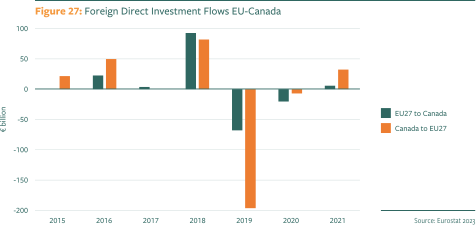
These divestments also affected the stock of foreign direct investment on both sides of the Atlantic. Following an increase in 2018, FDI stocks decreased to the level observed in the years prior to the implementation of CETA (this is particularly evident in the EU FDI in Canada, where Eurostat data are less incomplete than the Canadian FDI in the EU ) (Figure 28). ).
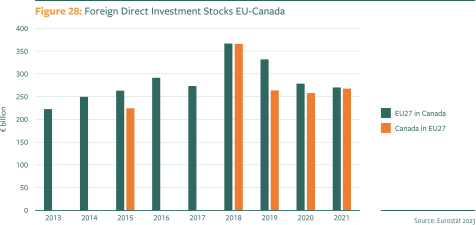
Foreign direct investment flows through EU tax havens
A special feature of EU-Canadian investments is the great importance of the two largest EU tax havens, the Netherlands and Luxembourg. The majority of EU investments in Canada and Canadian investments in the EU are channelled through the Netherlands or Luxembourg (Figure 29).
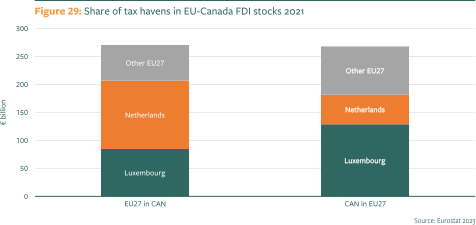
Both EU countries offer transnational companies the possibility to set up Special Purpose Entities (SPEs), which enables a profit shift from FDI recipient countries to SPEs in the Netherlands and Luxembourg, thus reducing their tax burden. The important role of tax havens in EU-Canada FDI is an indication of huge tax losses for both Canada and EU Member States. 92Arjan Lejour: Good tax practices in the fight against tax avoidance – The signalling role of FDI data, European Parliament, DG for Internal Policies, November 2013: https://www.europarl.europa.eu/thinktank/en/document/IPOL_IDA(2023)754198 For example, corporate tax revenues currently lost as a result of profit shifting could be used to finance the energy transition if CETA: contain appropriate provisions to stop these forms of corporate tax avoidance.
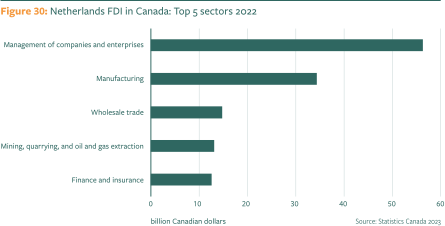
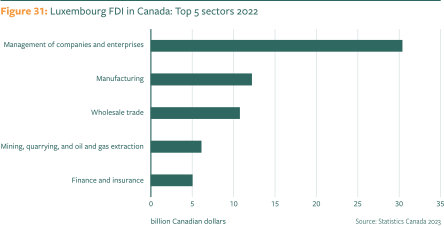
Figures 30 and 31 provide a closer look at the Canadian sectors receiving foreign direct investment from the two main EU investor countries, the Netherlands and Luxembourg. The main sectors receiving investment from the two EU tax havens are business management, manufacturing, wholesale, mining/oil and gas and the financial sector. Since the huge management sector is likely to invest significant sums through private equity firms and other instruments, it is not possible to identify the different sectors that fall under this broad heading and ultimately receive European funding. A review of Canadian direct investment in the EU found that the largest recipient of investment is Luxembourg, followed by the Netherlands. The main sectors receiving Canadian capital in these two countries are finance and management, and mining/oil and gas (Figures 32 and 33).
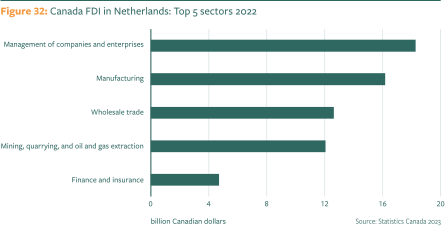
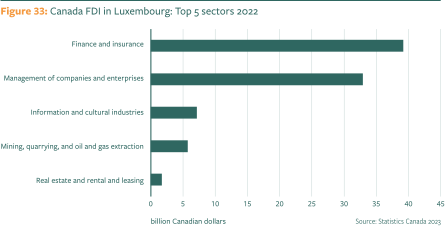
The key sectors receiving Canadian and European investment point to the particular climate risks of these bilateral capital flows. Investments in the energy-intensive manufacturing industry or the mining, oil and gas sectors pose significant risks to achieving the climate goals of both partners. The absence of a review mechanism in CETA targeting capital flows in sectors with a strong climate impact should therefore be of particular concern to policy makers.
Equally worrying is the large share of investment flowing through tax havens in the EU. These capital flows reduce much-needed tax revenues to support the energy transition. A revision of CETA should therefore include targeted measures to eliminate the profit shifting and tax avoidance opportunities offered by EU tax havens.
ICS will enable lawsuits against climate action
CETA has been applied for the most part provisionally since September 2017, with some notable exceptions. This is mainly due to the fact that some of its provisions fall under the so-called mixed competence and can therefore only enter into force once the parliaments of all EU Member States have ratified the agreement. The most well-known are the provisions on investment protection, i.e. on company law. In CETA, these are clarified by the investment court system. This system allows companies, states to sue for damages in the billions if political Decisions reduce their profits.
These corporate rights and the investor-state dispute settlement (ISDS) mechanism used to enforce them have rightly gained notoriety in recent years. The CETA Agreement contains a modified version of the ISDS, the so-called Investment Court System (ICS). However, the reformed ICS remains as risky as its predecessor ISDS – many of the actions submitted so far through ISDS could also be brought under the revised ICS framework . 93See Nelly Grotefendt, Alessa Hartmann; PowerShift, Environment and Development Forum (Ed) “Under Pressure: With group lawsuits against environmental protection”. Berlin, January 2019. https://power-shift.de/wp-content/uploads/2019/01/Under-Pressure-Mit-Konzernklagen-gegen-Umweltschutz-web.pdf Accessed: 06.10.2023.
Box 5:
ISDS and ICS compared - Old wine in a new bottle 94For more information on ICS and ISDS see: Eberhardt, Pia, et al. “CETA-Trading away democracy (September 2016) How CETA’s investor protection rules could result in a boom of investor claims against Canada and the EU.” https://corporateeurope.org/sites/default/files/ceta-trading_away_democracy-2016en.pdf Accessed: 14.06.2021; and Bonnitcha, J., & Brewin, S. (November 2020). Compensation under investment treaties. International Institute for Sustainable Development. https://www.iisd.org/system/files/publications/compensation-treaties-best-practicies-en.pdf Accessed: 14.06.2021

This ICS mechanism undermines the fair and equitable application of the rule of law. It impairs states' ability to protect the environment and the rights of consumers and workers, curtails the power of elected parliaments and transfers large amounts of taxpayers' money to businesses. The anchoring and focus of corporate rights by CETA is also hampering progress on climate protection: For example, significant investors can use the ICS mechanism to: ensure the ongoing operation of pipelines, liquefied natural gas (LNG) terminals or the extraction of fossil fuels and other raw materials, despite the apparent public interest in phasing out fossil fuels.
Such claims may hamper policy-making and discourage decision-makers from pursuing environmental and climate action in the public interest that could lead to disputes under CETA. 95Polonskaya, Frivolous Claims in the International Investment Regime: How CETA Expands the Range of Frivolous Claims that May be Curtailed in an Expedient Fashion, 17 Aper Rev. Int’l Bus. & Trade L. 1, 2017, p. 11; Tienhaara et al., aaO (Fn. 6), p. 703. By October 2023, out of a total of 1,257 known cases, at least 246 ISDS cases related to fossil fuels or mining had been handled. 96These figures are calculations from the UNCTAD Investment Dispute Settlement Navigator: https://investmentpolicy.unctad.org/investment-dispute-settlement Accessed: 11.10.2023. This means that at least one in five ISDS cases occurred in environmentally sensitive sectors and often targeted attempts to regulate them with or through public order. In its latest report, the Intergovernmental Panel on Climate Change also highlighted the rights of companies to act as an obstacle to the energy transition. 97World Climate Report 2022, 6. Progress report “Climate Change 2022/2023” Working Group 3, Chapter 14, p. 1506.
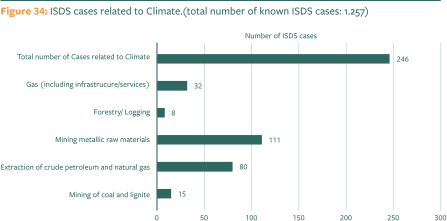
This problem is now widely recognised and attempts are being made at various levels to address it. Most recently, the Organisation for Economic Co-operation and Development (OECD) has launched a process to assess how to minimise the threat that ISDS poses to climate policy. One possible solution being discussed is an exception to ISDS's climate policy so that countries are not prevented from implementing progressive climate policies. 98Joshua Paine and Elizabeth Sheargold. A Climate Change Carve-Out for Investment Treaties Journal of International Economic Law, Volume 26, Issue 2, June 2023, Pages 285-304: https://academic.oup.com/jiel/article/26/2/285/7071568 Accessed: 16.11.2023. The idea is not new, 99Prof. Gus van Harten already tabled this idea in 2015: Van Harten, Gus, An ISDS Carve-Out to Support Action on Climate Change (September 20, 2015). Osgoode Legal Studies Research Paper No. 38/2015, Available at SSRN: https://ssrn.com/abstract=2663504 Accessed: 16.11.2023. But the fact that the OECD is now initiating the official process shows the need to address this issue. , and may also show the current political momentum in favour of such a change. CETA on the other hand, its investment protection agreements undermine precisely such efforts.
Box 5:
Gabriel Resources vs. Romania
Gabriel Resources, a Canadian mining company, is seeking $6.5 billion (€6.2 billion) in compensation from the Romanian state 100Gabriel Resources asked USD 6.5 billion from Romania in gold mine project lawsuit: https://www.romania-insider.com/gabriel-resources-damages-lawsuit-romania Accessed: 06.10.2023. because of his objection to a planned gold mine in Roşia Montană in Transylvania. This amount represents more than two percent of Romania's gross domestic product in 2022. 101https://de.statista.com/statistik/daten/studie/270712/umfrage/bruttoinlandsprodukt-bip-in-rumaenien Accessed: 06.10.2023.
Should the mine project be realized, it would become the largest open pit gold mine in Europe. In order to extract gold, enormous masses of rock would have to be mined and refined. To this end, 12 to 15 million kilograms of cyanide – a highly harmful chemical – would be applied and released into the environment. The use of cyanide is a very controversial issue, as it can get into drinking water and contaminate it in the event of accidents, with serious consequences for the local population and wildlife.
In July 2015, Gabriel Resources filed a request for arbitration against Romania with ICSID (World Bank International Centre for the Settlement of Investment Disputes). 102Henry Lazenby: Canada’s Gabriel Resources files international arbitration suit against Romania. In: Mining Weekly, 22.07.2015, http://www.miningweekly.com/print-version/canadas-gabriel-resources-files-international-arbitration-suit-against-romania-2015-07-22 The company is seeking damages under Romania’s bilateral investment agreement (BIT) with Canada and the United Kingdom. The complaint filed by Gabriel Resources relates to the Fair and Equitable Treatment (FET) clause. Investors are generally broadly defined as ‘fair and equitable’. In addition, the company alleges a breach of the provisions on ‘indirect expropriation’ and ‘discrimination’. 79 In mid-September 2023, it was announced that the judgment would be delivered within the next six months. 103Gabriel Resources: Press release: Gabriel files for international arbitration against Romania, 21. 07/2015, p. 3. In mid-September 2023, it was announced that the verdict would be reached within the next six months.104Gabriel Resources asked USD 6.5 billion from Romania in gold mine project lawsuit https://www.romania-insider.com/gabriel-resources-damages-lawsuit-romania Accessed: 06.10.2023.
The CETA agreement could lead to similar lawsuits, as the Investment Court System (ICS) has failed to effectively mitigate the relevant ‘fair and equitable treatment’ clauses, as well as the (indirect) expropriation and discrimination that Gabriel Resources cites in its lawsuit.
This concern is supported by the legal actions of Christophe Bondy – the former chief investment negotiator of the Canadian government during the CETA negotiations, who now works for the private sector (Ruby River Capital) and represents plaintiffs suing his former state employer. In the ISDS proceeding filed by Ruby River Capital against Canada under the NAFTA Agreement, Bondy uses CETA-like terminology around fair and equitable treatment to address the environmental impact assessment that gives the company approval for the The export terminal for liquefied natural gas was refused. The company he represents is currently seeking $20 billion in compensation for Quebec's forward-looking climate policy. 105For more information on the case see: Scott Sinclair: Toxic legacy: Énergie Saguenay, Climate Action and Investment Arbitration. An international LNG company’s record-breaking NAFTA lawsuit against Canada confirms the dire threat of investor-state dispute settlement to climate action. 2023.
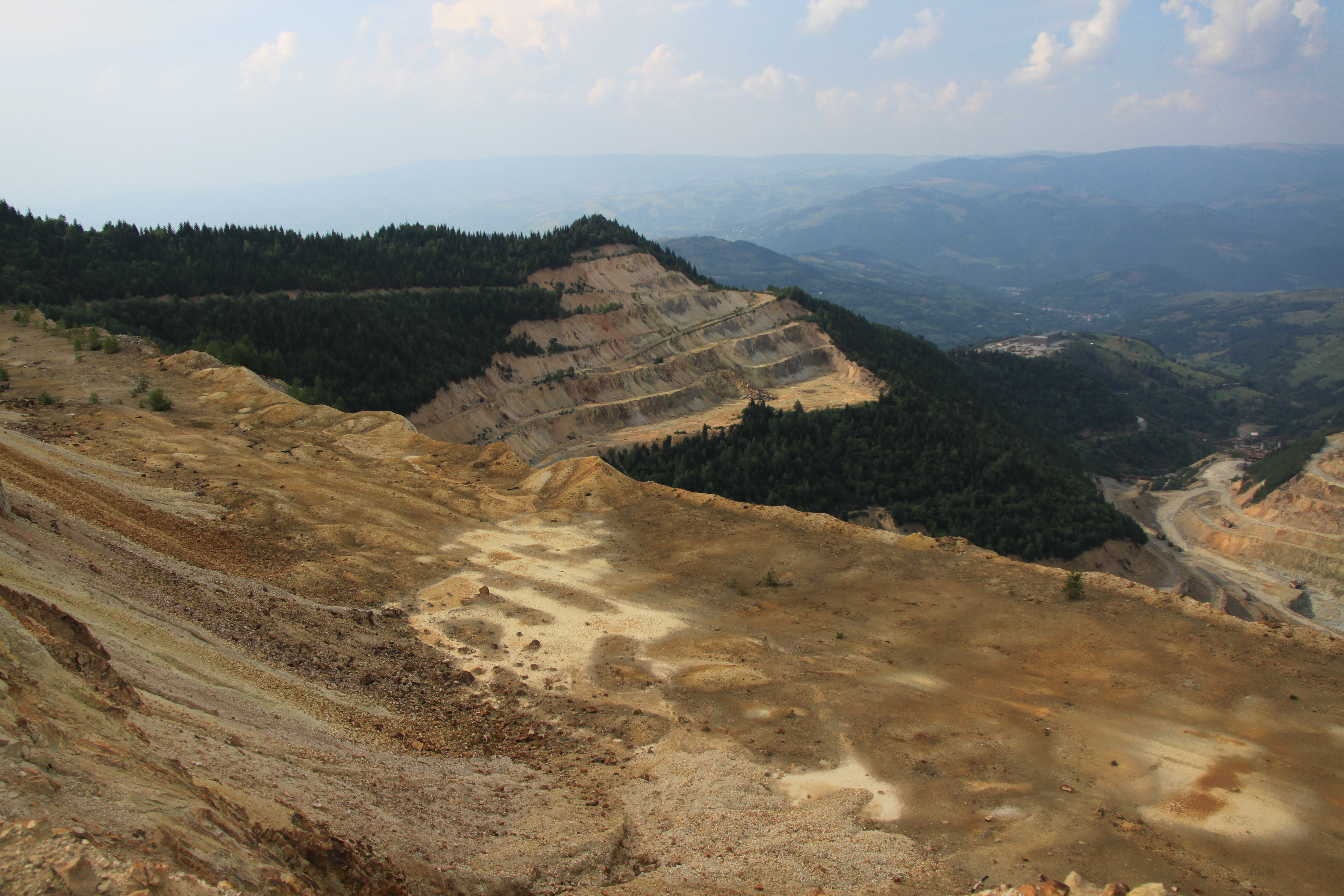
An open mine in Roșia Montană, Romania. Photo: Cristian Bortes / Flickr.com
Potential for oil and gas litigation under CETA
Canadian companies have made significant investments in oil and gas companies in the European Union, which gives them a well-founded interest in continuing to do so. Currently, 12 Canadian companies are active in the EU oil and gas industry, eight of which are already producing oil and gas in 2021. 106More information: Emma Jacoby, PowerShift e.V. (Ed) Investor protection and corporate litigation despite climate crisis? CETA, ECT and the environment are not green. Berlin, September 2021. https://power-shift.de/wp-content/uploads/2021/09/Investorenschutz-und-Konzernklagerechte-trotz-Klimakrise-web.pdf Accessed: 06.10.2023. In most cases, significant capital is invested before the extraction of oil or gas. EUR 4.2 billion was invested in the development of the Corrib gas field in Ireland, mainly owned by two Canadian investors. Canada Pension Plan (CPP) and Vermilion. 107DeRochie, Patrick & Scott, Adam (05.10.2020). Canada Pension Plan fuels the climate crisis with our own retirement savings. Canada’s National Observer. For If CETA is ratified and the Irish government enforces stricter climate regulations in the future, such as a production ban or a production restriction, CPP and Vermilion could take legal action against the government to demand compensation under CETA. Patrick Costello, a Green Party MP, brought a case before Ireland's Supreme Court, arguing that ratifying CETA would require a referendum to approve the amendment to the Irish constitution, which he believes CETA violated. In November 2022, the Irish Supreme Court ruled in its favour and concluded by a majority that the ratification of CETA would constitute a breach of the Irish Constitution due to the investor-state dispute settlement rights provided for in the Memorandum of Understanding. However, another part of the judgment identified a possible way out of this dilemma by amending certain national laws, and it remains to be seen whether the Irish Government will follow this path. 108More information: Éamonn Conlon (Éamonn Conlon SC Arbitration & ADR): Supreme Court Blocks Ireland Ratifying CETA. January 30, 2023: https://arbitrationblog.kluwerarbitration.com/2023/01/30/supreme-court-blocks-ireland-ratifying-ceta Accessed: 14.12.2023.
In the past, Canadian companies have filed 65 lawsuits against foreign states. 109According to UNCTAD dates as of 31 December 2022, see https://investmentpolicy.unctad.org/investment-dispute-settlement Accessed: 31.10.2023. Moreover, the potential for litigation under CETA is not limited to Canada and the EU . Indeed, well-known US companies such as Exxon Mobil Corporation, which are present in both Europe and Canada, could launch ICS actions under CETA. 110German Bundestag (2016): US companies in Canada in the context of the CETA free trade agreement: https://www.bundestag.de/resource/blob/434760/922d9466d6502e1a4e135406458cf470/WD-5-049-16-pdf-data.pdf Accessed: 24.05.2023; Vermilion Energy (2021): Our Operations, http://en.vermilionenergy.de/our-operations/overview-operations.cfm Accessed: 24.05.2023.
An effective climate policy in Europe would undoubtedly reduce the profits of oil and gas companies and other climate-damaging business activities. Taking such climate action by European governments could potentially lead to ICS cases under CETA . Alternatively, governments could not implement measures against them out of fear of the financial impact of the ICS rulings, which in turn would have a very negative impact on the climate.
Box 6: Declaration of interpretation by
CETA - Climate commitments cancelled
In autumn 2022, the CETA agreement should be ratified by the German Bundestag. The climate issues and concerns gained renewed attention in this process. In order to achieve a majority, the approval of the Green MPs of the country was required. Previously, the Greens had declared their intention to reject the CETA agreement. To address its concerns, the European Commission has prepared a so-called ‘interpretative statement’ to clarify controversial issues on investment protection standards and strengthen the fragile climate provisions of the agreement. 111CETA Draft Interpretative Declaration as of September 2022: https://www.gerechter-welthandel.org/wp-content/uploads/2022/09/20220905_Draft-Decision-and-Declarations_CETA.pdf Accessed: 18.10.2023. The Greens made their approval conditional on this text and led to the ratification of the CETA agreement by the Bundestag in December 2022.
However, the Commission had to clarify the interpretative statement with the other EU Member States and their counterpart Canada. The clarification process was completed in the course of 2023 without the involvement of parliamentarians. Subsequently, the final leaked text revealed that almost all references to more binding climate change agreements had been deleted. 112ETA Interpretative Declaration as of July 2023: https://power-shift.de/wp-content/uploads/2023/09/LEAK-PowerShift-Zusatzerklaerung-CETA.pdf Accessed: 18.10.2023. It appears that Canada has played a key role in this weakening of the declaration, as evidenced by leaked Commission telegram reports to Member States. 113Report of the meeting of the Trade Policy Committee (Services and Investment) on 19 July 2023, p. 9. This demonstrates once again the lack of interest of the Parties to increase their commitment to climate action through trade. The text was endorsed by the Member States in the Council and adopted as a decision by the Joint Committee in February 2024.
The EU’s inconsistency – time to end exclusive business rights!
Those company rights appear to be outdated in the context of CETA. Finally, both the EU and Canada have their own national, domestic courts that international companies can use at any time, similar to domestic investors who are not granted the exclusive ICS route. In addition, Canada has renegotiated a new trade settlement agreement that connects all three North American nations (USA, Mexico and Canada – USMCA) and was formerly known as NAFTA. This new agreement no longer includes ISDS, at least not between Canada and the US. Canadian Trade Minister Chrystia Freeland explained the reasons for this exclusion during a press conference in 2018: 114Prime Minister Trudeau and Minister Freeland deliver remarks on the USMCA: https://www.youtube.com/watch?v=UROrmufEVD4, Minute 15:39 to 16:16. Accessed: 19.10.2023.
It has cost Canadian taxpayers more than $300 million in fines and legal fees. ISDS increases the rights of companies over those of sovereign governments. By abolishing it, we have strengthened our government's right to regulate in the public interest and to protect public health and the environment.
– Chrystia Freeland, Canadian Minister of Commerce (2018)
The Energy Charter Treaty (ECT), signed in 1994, promotes and protects international investment in the energy sector. In the past, the ECT has been criticised for possible impacts on national sovereignty due to the high number of ISDS lawsuits based on the ECT . In 2022, Germany, together with several other European countries, withdrew from the Energy Charter Treaty. The European Union as a whole is also preparing for this. 115Notification of withdrawal on 19 December 2022: https://www.energycharter.org/who-we-are/members-observers/countries/germany More information on the Energy Charter Treaty: Fabian Flues, Pia Eberhardt, and Cecilia Olivet (March 2020). Myths surrounding the Energy Charter Treaty invalidate A Guide for the Media, Politics and Civil Society. PowerShift, Corporate Europe Observatory (CEO), Transnational Institute (TNI), Berlin, Brussels, Amsterdam. https://power-shift.de/wp-content/uploads/2022/02/Mythen-rund-um-den-ECT-entkraeften-web.pdf Accessed: 06.10.2023. However, this highlights a deep inconsistency in the EU's approach to investor rights. The EU recognises that investment protection provisions/investor rights endanger climate protection, withdraws from the harmful and much criticised ECT and at the same time ratifies another agreement that contains exactly the same rights. This is both contradictory and dangerous.
The presence of ICS in CETA fundamentally contradicts the claim that the Treaty supports positive action on climate change. The ICS is a relic from before the world became aware of the need to avoid climate chaos. It is far too dangerous to be implemented.
In short:
The investment chapter of CETA poses a risk to the energy transition. 116https://power-shift.de/pm-juristisches-gutachten-zeigt-ceta-bedroht-die-energiewende-trotz-nachbesserungen
– Alessandra Arcuri, University of Rotterdam
The ICS, a modified version of the Investor-State Dispute Settlement (ISDS) procedure in the CETA agreement, allows companies to sue states for damages if political decisions have an impact on their profits. Despite the introduction of the ICS, it remains risky as many ISDS issues could continue to arise.
The Investor-State Dispute Settlement Mechanism (ISDS) grants investors vaguely worded rights without binding obligations, while providing limited protection for the public interest and limited access to arbitration for affected parties. In addition, the mechanism allows potentially large amounts of compensation, allowing taxpayers' money to be passed on to companies. This undermines the rule of law and undermines states' ability to protect the environment and public interests. The ICS has a negative impact on climate protection, as companies could use it to challenge policies that promote environmental protection. In addition, CETA can lead to litigation in the oil and gas sector involving Canadian companies investing in the EU. These companies can sue governments for damages if strict climate regulations affect their businesses.
The CETA interpretative statement, which aims to address concerns and strengthen climate rules, does not do this sufficiently.
In addition, there is an inconsistency in the EU’s approach to investor rights, as it withdrew from the Energy Charter Treaty but ratified CETA, which includes similar rights. The inclusion of ICS in CETA is at odds with positive action on climate change.
recommendations
In the context of increasing global tensions and the need to address climate change, the link between trade and climate has become a crucial focus for researchers, policy makers and environmentalists. Trade agreements such as CETA are under scrutiny due to their potential impact on greenhouse gas emissions and environmental policy. The EU, a major Trade power, whose ambitious climate targets are set out in the European Green Deal, plays a key role and has significant potential to shape greener trade practices globally. The EU initially promoted CETA as a progressive agreement with strong commitments on environmental protection and climate change. However, critics – including experts, researchers and civil society groups – have expressed many concerns about the impact on the environment, in particular on climate.
These concerns were clearly substantiated in this study. Our detailed analysis tracks the trade patterns before and after the provisional application of CETA in 2017 and the work of the committees established under the agreement. Our main result is that CETA does not seem to be a climate-friendly agreement. Since its application, trade in climate-damaging goods between the EU and Canada has increased and the agreement does not provide for binding provisions to mitigate its impact on global warming.
We recommend that CETA be revised as follows:
- Include strict climate protection provisions:
Provisions on climate change mitigation and adaptation need to be included in all chapters of the Agreement. CETA must be subordinated to climate targets and international commitments to achieve net-zero emissions. - Restrict or stop trading in harmful products:
Trade in climate-damaging goods such as oil, coal, wood, meat and plastics must be reduced or stopped altogether. CETA should contain clear rules on limiting or prohibiting trade in harmful goods. It should also include binding mitigation measures that support the decarbonisation of production methods, complemented by commitments on technology transfer and financial support. - Disempowerment of undemocratic bodies:
The power of the CETA committees to amend parts of the agreement after ratification must be limited. These bodies must commit to transparent processes to curb the influence of corporate lobbyists hampering climate action. Minutes of meetings, correspondence and other documents shall be available to the public. Elected representatives must be given the opportunity to participate actively and to vote on proposed Treaty amendments. - Inclusion of Environmental Investment Review and Rejection
Dispute resolution between investors and states:
CETA needs an environmental investment screening mechanism to control bilateral investment flows based on their climate impact. Such a mechanism should be included, as the emission-intensive manufacturing, mining, oil and gas industries are among the main sectors receiving bilateral investment in the EU and Canada. In addition, the ICS – a revised investor-state dispute settlement mechanism – needs to be removed from CETA . This right of companies to sue states unreasonably increases the cost of strict climate legislation – or may even prevent the adoption of relevant laws and regulations – due to the risk of excessive compensation payments.
The ongoing ratification process of CETA within the EU provides an opportunity to assess how trade agreements, in particular those involving environmentally conscious partners, actually influence climate outcomes. In this regard, our assessment shows that CETA shows little evidence that it has a positive impact on key climate outcomes, despite rhetoric to the contrary.
At the same time, there is still the possibility of political intervention, as the ratification of CETA is still ongoing in many European countries and the agreement has therefore not yet fully entered into force (see Figure 35).
Our recommendation for this: As long as trade agreements do not support ambitious climate targets and contribute to achieving them, they should not be ratified.

The responsibility for the content of this publication lies with the authors.