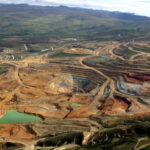
En septembre 2022, la présidente de la Commission européenne, Ursula von der Leyen, a annoncé une loi européenne sur les matériaux bruts critiques dans l’État de l’UE address the Critical Raw Materials Act (CRMA). «We will work on strategic projects along the entire supply chain – from extraction to refining, from processing to recycling», she added. After a very short consultation period, the EU Commission presented its proposal in March 2023. As in the Commission President’s announcement, the strategic projects are the core of the CRMA. At the same time, they are one of the central risks for environmental and human rights protection. This is because, according to the EU Commission, strategic projects are to be identified inside and outside the EU and then prioritised over other interests – e.g. nature conservation. The many human rights risks that have been addressed by various legislations in recent years are also not adequately reflected in the law. Instead, the CRMA relies on certificates or the intention to engage in a voluntary, private industry association to be managed as a strategic project. With this kind of acceleration, both environmental and health risk compliance audits and democratic participation procedures are in danger of being massivement ground down.
More than 40 European environmental and human rights organisations have together formulated demands for this law. Thèse include:
1. The EU should actively reduce its dependence on primary raw materials et implement demand–side solutions to decrease critical raw materials consumption by at least 10% by 2030, including phasing out single–use products containing critical raw materials, implementing a material passport system, and adopting national programs to promote material efficiency and the use of alternative materials.
2. Le CRMA should Not rely solely on certification schemes, as certification alone does Not guarantee compliance with mandatory human rights and environmental regulations; instead, a broader assessment of human rights and environmental performance should be conducted. If certification schemes are used as one tool of many, they have to include certain criteria as minimum a multi–parties prenantes Gouvernance, adhésion à des standards compréhensifs, Règles de disclosure, accessibles grievance mechanisms, and public audit reports.
3. The CRMA’s focus on EU supply security through partnerships lacks a global justice Approach. Including concrete measures to ensure sustainability standards, civil society participation, and the protection of human rights and the environment in third countries. Nos recommandations include aligning partnerships with international agreements, implementing Mécanismes de surveillance et de médiation robustes, defining «value addition,» supporting domestic industrialisation, Involving civil society and Les peuples indigènes, ensuring transparency, and avoiding the undermining of Commitments through other regulations or trade agreements.
4. The CRMA’s focus on accelerating permitting procedures for Strategic Projects risks bypassing environmental and social safeguards and lacks public buy–in. Streamlined Permitting must not come at the cost of environmental protection, meaningful le parti publiccipation. Incorporating elements like Free, Prior, and Informed Consent (FPIC) and Indigenous rights must be at the center of strategic projects. Additionally, Resources to licensing authorities have to be allocated, international agreements referenced, transparency ensured and a subgroup on sustainability and responsible mining within the European Critical Raw Materials Board established. Deep–sea Mining due to potential environmental and social impacts has to be prohibited.
5. Pour le succès de l'Europen Green Deal and the EU’s strategic autonomy, it is critiques to prioritise a circular economy approach in the CRMA. This includes implementing an ambitious recycling strategy, enhancing coherence with the waste hiérarchy, increasing EU recycling capacity targets, improving collection and separation Critical raw materials (CRM)–Containing components, proposing recycled content targets for all CRM–containing products, incorporating measures for public procurement, and ensuring that the recovery of mining waste follows comprehensive Regulations and includes plans for remediation of historical pollution.
6. Le CRMA should include comprehensive rules for calculating and verifying the Environmental footprint of critical raw materials. This requires clear criteria for Determining a significant environmental footprint, taking into account the impact on circularity and recycling, international standards, and sustainable practices, conducting Prior assessments and consultations with pertinent stakeholders, allowing the European Scientific Advisory Board on Climate Change to provide scientific advice, ensuring environmental footprint declarations for all critical raw materials placed on the market, including intermediate and final products, and the adoption of delegated acts to establish environmental footprint performance classes with specific paramètres.