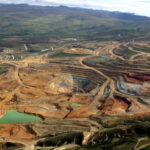
The social and environmental impact of Industry 4.0 on the raw materials sector
In recent years, hardly any industrial policy article can do without the term ‘Industry 4.0’. "Industry 4.0" is intended to make it clear that we are on the verge of the fourth industrial revolution and that advancing digitalisation offers solutions to the challenges of our time. At a time when global economic growth is subdued and states are in recession, Industry 4.0 seems to be the bright light at the end of the crisis tunnel. With increasing digitalization, the credo is that economic growth would rebound and at the same time solve some of the pressing ecological, economic and social crises. In terms of raw materials policy, Industry 4.0 promises us dematerialisation and higher raw material efficiency. But is that true? Isn't it much more like Ulrich Grillo, then BDI President at the fifth BDI Raw Materials Congress, remarked: "Digitalisation and the energy transition will significantly increase demand for raw materials such as rare earths or lithium.“ This is also the finding of the German Raw Materials Agency in its study “Raw materials for future technologies 2016“. At the same time, environmental, human rights and development organizations have so far hardly dealt with Industry 4.0. Studies on human rights or environmental implications are almost completely absent. Reason enough to address the demand for raw materials and potential effects of Industry 4.0 as a PowerShift and to present a first discussion paper entitled ‘Resource Curse 4.0’.