foreword
As a civil society organisation, we generally welcome the third edition of the German Raw Materials Efficiency Programme. The many measures show which challenges for resource protection lie ahead of German politics, industry and society. However, we regret that ProgRess III continues to focus on the economical and efficient use of raw materials, which is mainly measured by the decoupling of economic growth and raw material consumption (page 5). Instead, from the point of view of PowerShift, it would need targets for an absolute reduction, especially in the consumption of metals and minerals. Compared to global per capita consumption (RMC/capita, pp. 21f.), Germany has an almost constant, high consumption of natural resources. Unfortunately, the Federal Republic of Germany is still far from achieving an absolute reduction in consumption, especially in the case of non-renewable resources.
Responsible raw material supply / supply chain law
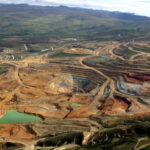
As much as we consider the support of good governance (measure 1) and best practice projects (measure 3) to be generally useful, there is no law in Germany for human and environmental due diligence. Such a regulation calls, among other things, for a broad alliance of environmental associations, trade unions, churches and human rights organisations, which are involved in the Supply Chain Act initiative.[1] Closed together. We welcome the fact that according to Measure 8 in ProgRess III and in the Raw Materials Strategy presented by the Ministry of Economic Affairs on 15 January 2020[2] the BMU will initiate an international process for environmental due diligence. However, the ecological due diligence obligations should also be implemented in Germany. Because in the global value chains, serious human rights violations and environmental destruction in international mining up to Germany have repeatedly been proven in recent years: from the rupture of the retention basin in Brumadinho (Brazil) to the murder of striking miners in Marikana (South Africa). Here, the legislator should readjust and launch a supply chain law with binding due diligence obligations and corporate liability. This would also help to effectively pool the multitude of company or industry-specific standards referred to in Action 2 that overwhelm public authorities, businesses, civil society and stakeholders. A German supply chain law to implement the UN Guiding Principles, as indicated in Measure 2, would provide a good basis for enforcing human rights and environmental due diligence obligations of German companies and would establish a level playing field.
Promotion of foreign trade
Especially when it comes to foreign trade promotion, the German government has missed opportunities in recent years to enforce human rights and higher standards in global mining. In 2019, Guinea even filed a complaint before the World Bank against an extension of a bauxite mine, which is also supported by Unbound Financial Loan (UFK) guarantees from the Federal Republic of Germany.[3] The fourth measure in ProgRess III only describes the weak status quo. Instead, the federal government should actively use the instruments of foreign trade promotion as a lever to improve compliance with environmental and social standards in the international mining sector. Important instruments for foreign trade promotion are guarantees for untied financial loans and export credit guarantees (herme guarantees). To date, the main criticisms of civil society are: firstly, the lack of transparency with regard to guarantees and guarantees granted. The published project information is not sufficient to carry out a comprehensive assessment. Secondly, established human rights and environmental due diligence obligations, as well as their public reporting by companies, are not a precondition for the granting of these guarantees. The federal government urgently needs to improve on this. Thirdly, given the challenges of the climate crisis, there should no longer be any support for fossil-based raw material projects.
Trade policy/Sustainability chapter
Sustainability chapters of European trade agreements are currently ‘dialogue-oriented’. Unlike all other chapters of a trade agreement, they are not subject to the state-to-state dispute settlement mechanism, which means that the agreements on environmental and human rights are not enforceable or a violation is not sanctionable. The Federal Government must commit itself to making sustainability chapters binding or, better still, to subordinating entire trade agreements to sustainability aspects.
The Federal Government should examine how European trade policy can contribute to a reduction in the consumption of raw materials. Trade policy can be an instrument of this policy, for example by using products based on their CO2 emissions.2-Footprint and other environmental aspects are treated differently. One way to do this is to take measures to evaluate the production process (Process and Production Methods; PPM), where ecological criteria can be considered. If these apply to the EU market as well as to external trade relations, this can also help to reduce production shifts to countries with lower standards.
Trade policy / Public procurement
The Federal Government should work to ensure that international trade agreements stipulate that the award of public contracts in the sense of sustainable procurement is linked to social and environmental criteria.
Trade policy / Raw materials chapter
In six trade agreements so far, the EU has integrated its own commodity chapter (Australia, New Zealand, Tunisia, Chile, Indonesia and Mexico). However, these focus primarily on access to raw materials and the elimination of trade barriers. Particularly in the area of licensing, too little attention is paid to environmental and human rights aspects.
Environmental impact assessments (EIAs) should also be a mandatory part of the process of granting mining licences. For example, it is worrying that only three of the six proposed texts for ERM chapters contain a corresponding article requiring the contracting parties to carry out an EIA before issuing a mining licence. There is no EIA article in the proposed texts for the ERM chapters with Chile, Mexico and Indonesia. This contradicts the EU Commission's plan to link trade agreements with high environmental and social standards. Moreover, the results of the EIA should have a clear impact on the granting of licences and not be a mere mandatory exercise.
ILO 169
We welcome the fact that both in the Coalition Agreement and in ProgRess III (measure 6) the Federal Government is seeking the ratification of Convention 169 of the International Labour Organization (ILO) for the protection of the rights of indigenous peoples. Indigenous peoples are particularly affected by the extraction of raw materials. Their habitats are home to the world's most sought-after natural resources. The communities that have settled there for centuries usually do not have secured land titles and are often distributed without compensation. In principle, it is therefore important that German companies pay attention to compliance with ILO Convention 169 in the raw materials supply chain, according to which indigenous peoples must be consulted at an early stage before new raw materials projects. In addition, Germany's ratification of ILO Convention 169 at the international level would be an important signal.
Mobility and raw materials
As PowerShift, we welcome the fact that the Federal Government will also address the resource aspects of future mobility. We support a shift of public expenditure towards resource-efficient transport infrastructure (measures 98 and 99), the shift of the MIV and the intensification of public transport (measure 100). ProgRess III also includes good approaches to electromobility, which must go hand in hand with an absolute reduction in the consumption of raw materials in automobiles – smaller, lighter, less and shared usage concepts of automobiles. The sustainable use of electric vehicle batteries, including setting a collection rate and increasing recycling efficiency, including expanding the circular economy for electric mobility (measures 103 and 104), is key to exploiting the climate and environmental protection potential of electric mobility. Here, the Federal Government must take action for Germany and also at the European level, so that the traffic turnaround does not become a pure drive turn and the ecological and human rights impacts of the MIV are significantly reduced.
[1] https://lieferkettengesetz.de/
[2] https://www.bmwi.de/Redaktion/DE/Downloads/P-R/rohstoffstrategie-der-bundesregierung.pdf?__blob=publicationFile&v=6
[3] See: Rüttinger et al.(2016): Environmental and social impacts of bauxite extraction and processing in the Boké and Kindia region, Guinea. online: https://www.umweltbundesamt.de/sites/default/files/medien/378/dokumente/umsoress_fallstudie_bauxit_guinea_finale_version.pdf; Hartmann (2019): Land grabbing for German cars; https://power-shift.de/landraub-fuer-deutsche-autos/ and Muscovici (2019): A village sues the World Bank; https://www.deutschlandfunk.de/guinea-ein-dorf-verklagt-die-weltbank.799.de.html?dram:article_id=452902