At the beginning of the 2000s, Latin America showed that things could be different: Starting from Venezuela, ‘progressive’ governments were elected in various countries and the so-called ‘Left Decade’ was heralded. After two decades of neoliberal politics in large parts of the continent, the concerns of the poorer sections of the population should finally come to the fore.
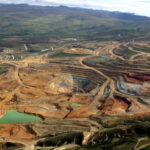
In a phase of predominantly high commodity prices, ‘progressive’ governments now increased government revenues from the commodity sector and invested them in social, education or health programmes. This initially led to the pacification of some areas of social conflict and to a broad political legitimacy of the governments. However, far-reaching structural changes were largely absent. Latin America is still the continent where wealth is most unequally distributed. In the ‘Left Decade’, so-called neo-extractivism replaced neoliberal extractivism in many countries. The impact remained equally serious: Entire parts of the country were contaminated, activists were criminalised, threatened or even murdered.
In the present study, Tobias Lambert takes stock and analyses the situation from today's perspective. On the basis of several country examples, the raw materials policy during the raw materials boom from 2003 onwards will be traced and the economic and social consequences of extractivism will be examined.
FDCL-Verlag Berlin, 2020. ISBN: 978-3-923020-97-3