Berlin, 28 April 2022:
The battery regulation proposed by the European Union should oblige importers and manufacturers to responsibly procure the bauxite, copper and iron used in batteries, according to a coalition of 13 organizations today. The coalition includes Amnesty International, Earthworks, Finnwatch, Germanwatch, Human Rights Watch, Inclusive Development International, INKOTA, PowerShift, RAID, SOMO and Transport & Environment, as well as human rights and environmental activists from the manufacturing countries.
The Battery Regulation will set mandatory requirements for all batteries (device, starter, traction and industrial batteries) placed on the EU market. This includes regulations requiring battery importers and manufacturers to identify and eliminate actual and potential human rights and environmental violations in the procurement of key raw materials. The European Parliament has proposed a list of raw materials that includes bauxite, copper and iron, as well as cobalt, graphite, lithium and nickel. Member States in the European Council want to remove bauxite, copper and iron from this list. The Council, Parliament and the Commission started negotiations on the final draft Regulation on 20 April 2022.
"The European Union's efforts to ensure that battery supply chains are free from human rights violations and environmental damage will fall short if they exclude bauxite, copper and iron," said Jim Wormington, Senior Corporate Accountability Researcher and Advocate at Human Rights Watch. “The three raw materials are important for battery production, but the way they are mined and processed has led to many human rights and environmental degradations worldwide.”
Aluminium is extracted from bauxite, an important material for electric car batteries. Four tons of bauxite are needed to produce one tonne of aluminum. According to Volkswagen, a typical 400 kg electric car battery in 2021 consists of 126 kg of aluminium, which is far more than any other metal. The industry association International Aluminium Institute assumes that the use of aluminium in batteries and other components of electric vehicles will lead to a doubling of the aluminium consumption of car manufacturers by 2050.
Copper is used in battery anodes and electrical cables. The International Copper Association predicted in 2019 that energy storage applications will increase annual copper demand by 2.3 million tons by 2029. This represents about 10 percent of the world's copper supply. Iron, which is needed for the steel of battery housings, is also used in several new battery technologies.
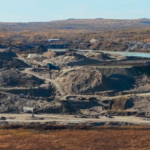
Although the aluminium, copper and steel industries advertise their sustainability and environmentally friendly properties, all three raw materials are associated with destructive impacts on human rights and the environment. Bauxite mining is the main driver of deforestation within mining leases in Brazil's Amazon rainforest and has led to widespread losses and destruction of agricultural land and water resources in West African Guinea, the country with the world's largest deposits. The large amounts of energy needed to refine and melt aluminium – and the industry’s continued high dependence on coal for this energy – also means that aluminium production is responsible for 2% of global greenhouse gas emissions.
"I was able to see first-hand the devastating impact of Bauxitabbaus on the land, prosperity and local environment of dozens of communities," says Mariama Barry, a Guinean activist and member of the Africa programme of Inclusive Development International, who works with Guinean communities seeking reparation for the damage caused by bauxite mining. “The increasing demand for aluminium for electric car batteries and other energy technologies should be an opportunity to recognise and respect the rights of workers and communities, rather than exacerbating existing grievances.
Copper mining and processing are also associated with significant human rights and environmental risks. In Zambia, copper mining has reportedly led to massive land loss for farmers, including forced evictions, as well as water and air pollution. Copper and cobalt are also often mined together, causing similar human rights violations. In the Democratic Republic of Congo in 2020, scientists found that exposure to toxic pollutants in children of cobalt and copper miners leads to malformations. Human rights groups published a report in 2021 documenting labour rights violations in Congo in five of the world's largest copper and cobalt mines, including unsafe working conditions, inhumane working conditions, discrimination and racism.
“Cobalt may dominate the headlines, but for workers and local communities, copper mining has the same devastating impact on human rights, labour rights and the environment”, said Josué Kashal, Monitoring and Evaluation Manager at the Centre d’Aide juridico-judiciaire, a Congolese legal aid organisation that co-authored the 2021 report. “Governments should require companies to source both copper and cobalt responsibly.”
The mining and processing of iron ore also poses significant environmental and social risks. In January 2019, a dam broke in Brumadinho, Brazil, where waste from iron ore mining was dammed up. A flood of toxic mud and mining waste flooded a nearby city, burying more than 250 people under it. In 2015, the rupture of another iron ore dam in Brazil had already killed 19 people and caused far-reaching environmental damage.
Combustion of coke and other types of coal for processing iron ore by the steel industry also releases greenhouse gases and large amounts of pollutants that pollute the air. Following a 2019 visit to Brazil, the second largest iron ore producer in the world, the UN Special Rapporteur on Toxins and Human Rights stated that the pollution and resulting health problems experienced by communities in Piquiá de Baixo, a municipality at the heart of Brazil's steel industry, "constitute a clear violation of the right to life, health, information and many other rights."
"Incidents like Brumadinho, one of the worst mining disasters of the last decade, show why battery manufacturers and importers should be required to source raw materials responsibly," said Alejandro González, researcher at SOMO. “The European Union should include bauxite, copper and iron in the scope of the Battery Regulation to protect workers and communities from human rights and environmental violations.”
List of signatory organisations:
Amnesty International
Centre d’Aide juridico-judiciaire (Democratic Republic of the Congo)
Collectif des organizations de la Société Civile pour la défense des droits des communautés (Guinea)
Earthworks
Finnwatch
Germanwatch
Human rights watch
Inclusive development International
INKOTA
PowerShift
Rights and Accountability in Development (RAID)
SOMO
Transport & Environment