Berlin, 17 March 2026: The debate on security of supply and the accelerated expansion of domestic mining often speaks of particularly high European environmental and social standards. A new study by PowerShift and the German Nature Conservation Association (NABU) in cooperation with mining and investment experts calls this assumption into question.
The analysis shows that there are significant gaps in the existing legal framework for mining projects. In particular, there is a clear need for improvement in the democratic participation of affected people and in the comprehensive assessment of environmental impacts, from exploration to the decommissioning of a raw material project.
"However, the claim that Europe already has the highest mining standards is politically convenient does not stand up to scrutiny. Those who speak of a pioneering role must close existing gaps and enable democratic participation instead of pursuing further deregulation," says Maja Wilke, raw materials expert at PowerShift.
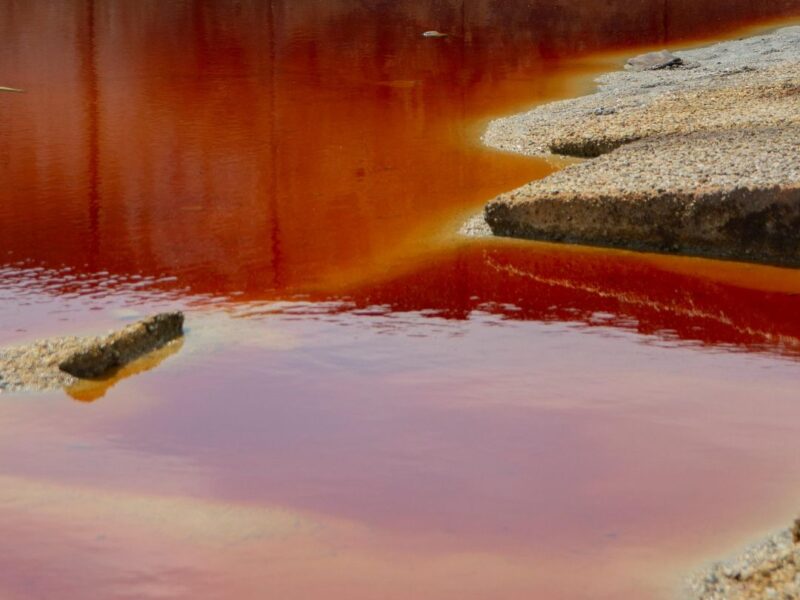
The debate on the future of the Water Framework Directive is particularly sensitive. The protection of water and drinking water should not be subordinated to the industrial policy acceleration targets.
"The Water Framework Directive is a key pillar of European water protection and ensures, among other things, the quality of our drinking water. If we talk about strengthening domestic raw material extraction, this must not be to the detriment of this standard of protection. A responsible raw materials policy must take environmental and water protection into account from the outset – not retrospectively relativise it", explains Anna Schönwald, Policy Officer for Raw Materials at NABU.
The study documents recurrent problems in permitting procedures, including late consultations, short deadlines for comments and insufficient access to information. Participation thus threatens to become a formality, while conflicts and litigation become more likely.
“Democratic participation is not an obstacle, but a precondition for legitimate and sustainable decisions. Involving communities too late or insufficiently undermines trust and is likely to lead to resistance among the local population", explains Michael Reckordt, raw materials expert at PowerShift.
The authors conclude that a sustainable European raw materials policy must not rely on the reduction of environmental and participation rights. Instead, a strategy is needed to reduce demand, strengthen the circular economy and strictly regulate mining where it is unavoidable.
Further information and the full study can be found at: https://power-shift.de/wasser-eu-rohstoffstrategie/
If you have any questions, please do not hesitate to contact:
- Maja Wilke, PowerShift consultant for raw materials policy, maja.wilke@power-shift.de, +49 (0)30 42085295
- Anna Schönwald, NABU consultant for raw materials policy, anna.schoenwald@NABU.de, +49 (0)30 284 984 1665
- Michael Reckordt, PowerShift Policy Officer, michael.reckordt@power-shift.de, +49 (0)163 6336372