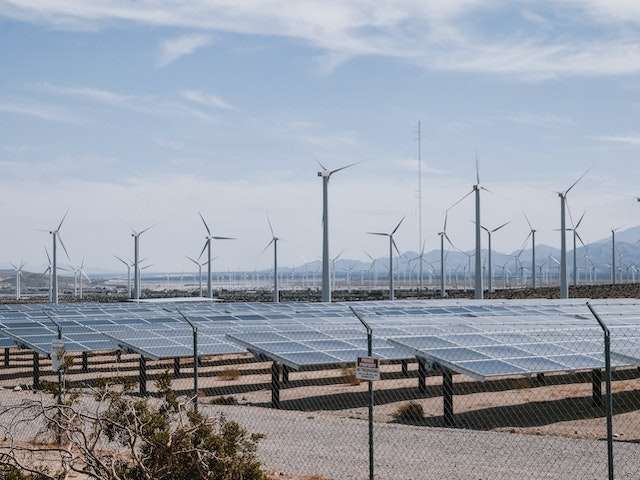
Berlin, 17/01/2023: A new one presented today study The Berlin-based non-governmental organization PowerShift shows that renewable energy production has no much greater demand for metals than fossil energy production. On the contrary: Some renewable energy technologies, such as roof-mounted PV systems, perform significantly better in terms of their metal footprint than, for example, fossil-fired coal-fired power plants.
The organisation thus contradicts the Federal Government, according to which ‘the transformation to greenhouse gas-neutral technologies leads to a significant metal demand for corresponding mineral raw materials’. The European Commission also wants to launch a Critical Raw Materials Act later this year to ensure the supply of lithium, cobalt, copper and other metallic raw materials to European industry.
The increase in the consumption of metallic raw materials is rarely put into context with the worldwide negative consequences of mining, criticizes PowerShift. These include water and land-use conflicts, pollution and the destruction of the rainforest. Mining is also responsible for about 10 to 15 percent of global CO2 emissions, and the Global metal use targets are incompatible with the two-degree climate target.
“In order to effectively tackle the climate crisis, we urgently need a raw material transition. This means, on the one hand, that metallic raw materials, including those needed for renewable energy technologies, must be mined under the highest possible environmental and social standards. In addition, it is essential to reduce the absolute consumption of metallic raw materials, for example through sector-specific targets in the transport sector", explains Michael Reckordt, raw material expert at PowerShift.
"The real challenge is not the switch to renewable energies, but the question of where the metals will be used in the future. Our study "Metals for the energy transition" shows: Compared to the metal consumption of the automotive industry, far fewer metals are needed for the expansion of renewables: The electric Volkswagen drive batteries alone, which will be produced in 2030, will require about eight times as much aluminium and nickel as the total planned addition of wind turbines in Germany from 2022 to 2030," Reckordt continued.
In a second report presented today study In addition to the reduction targets, the environmental organization also shows that the expansion of a circular economy with a focus on longevity, repairability and a product design designed for recycling of raw materials plays a central role. The background is that many solar and wind turbines will be replaced in Germany in the next few years, resulting in large quantities of recycling scrap from this industry.
"There is now a need for clear and uniform legal requirements for the dismantling and renewal of old plants in Germany and the EU. In order to make the energy transition as resource-efficient as possible, we must recover the valuable raw materials from old plants. To achieve this, we need an improved, comprehensive collection and recycling infrastructure. In addition, new plants must be as durable, easily repairable and recyclable as possible in accordance with strict ecodesign requirements", demands Hendrik Schnittker, raw material expert at PowerShift.
In fact, the Federal Environment Ministry of Steffi Lemke (Greens) is currently working on a national circular economy strategy. They are designed to preserve raw materials in products for as long as possible. To date, the European Union's WEEE Directive of 2012 obliges PV module manufacturers to ensure the return and recycling of their products. Since the last amendment to the WEEE Directive in 2018, 85 percent of the PV modules sold have to be collected and 80 percent of the total weight recycled.
“Mechanical recycling processes dominate to meet this requirement. However, these processes severely restrict the recycling of raw materials. The aluminum frame and part of the glass can be recovered. The polymer fraction is used for energy production (i.e. burned) or landfilled, but the metal-solar cell residues are not recovered. In order to promote high-quality recycling, where all parts are recycled, more emphasis must therefore be placed on recovery values when revising the WEEE Directive, especially for key raw materials such as silicon or silver," explains Yun Luo, CEO of recycling company Rosi Solar.
Press contacts
Michael Reckordt, raw materials expert, michael.reckordt@power-shift.de, 0163 633 63 72
Hendrik Schnittker, raw material expert, hendrik.schnittker@power-shift.de, +49 (0)30 2472 4541
left