EU-Chile: Civil society criticizes wave-through of neocolonial agreement
Berlin, 29 February: Despite intense debate in the European Parliament, 319 MEPs voted today to extend the EU-Chile agreement (with 113 votes against and 121 abstentions). The extension of the agreement is aimed primarily at liberalisation in the fields of agriculture and raw materials, while at the same time special rights for corporations are to be granted and no measures are to be taken to protect human rights and the climate. “The EU-Chile agreement is caught up in the liberalisation logic of the last century and offers no solutions to the social and environmental problems of the 21st century”, criticises Bettina Müller, trade officer at PowerShift.
Exacerbation of current crises
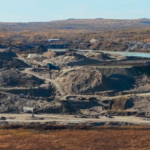
The enlargement of the EU-Chile Agreement will exacerbate current social and environmental crises. Liberalisation in trade in agricultural goods such as salmon and dairy products or pesticides is leading us further away from the much-needed turnaround towards regional and organic agriculture. Furthermore, the agreement would promote an extractivist model of resource degradation leading to water problems, biodiversity loss and human rights violations in Chile. This particularly affects local and indigenous communities near the mining sites. The agreement does not provide for adequate protection of the climate and the environment or for the rights of the local population to have a say. In addition, the EU-Chile agreement also includes parallel justice for corporations, with which they can, for example, complain about lost profits due to climate protection measures.
The Latin American Observatory for Mining Conflicts, OCMAL, currently counts 49 cases in Chile where mining projects have a negative impact on the local population and environment. Thus, the agreement also contradicts the goals of the European Green Deal, criticizes Iris Frey of Attac Austria.
Social-ecological transformation only with fair trade policy
Criticise together with the Chilean platform “Chile Mejor sin TLC” More than 100 civil society organisations in a transatlantic alliance, the extension of the agreement. “We cannot combat global climate change by making entire areas of land uninhabitable in countries like Chile. The energy and mobility transition in Europe must not come at the expense of ecological destruction in the global South. Instead, we need agreements that put people and the climate at the centre and actively avoid the disadvantages of the current agreements”, concludes Theresa Kofler from the Platform for Different Action.
Questions & Contact:
- Bettina Müller, Commercial Officer at PowerShift e.V., bettina.mueller@power-shift.de, 0049 174 4537604
- Theresa Kofler, Coordinator of Other Actions – Making Globalisation Fair, theresa.kofler@anders-handeln.at, +43 (0) 680 154 50 19, www.anders-handeln.at
The Anders Handel platform was initiated by Attac, GLOBAL 2000, Südwind, the trade unions PRO-GE, vida and younion _ Daseinsgewerkschaft, the Catholic Workers' Movement and ÖBV-Via Campesina Austria and is supported by around 50 other organisations.